Solutions to Systems of Linear Inequalities in Two Variables
Student Summary
In this lesson, two linear inequalities in two variables represent the constraints in a situation. Each pair of inequalities forms a system of inequalities.
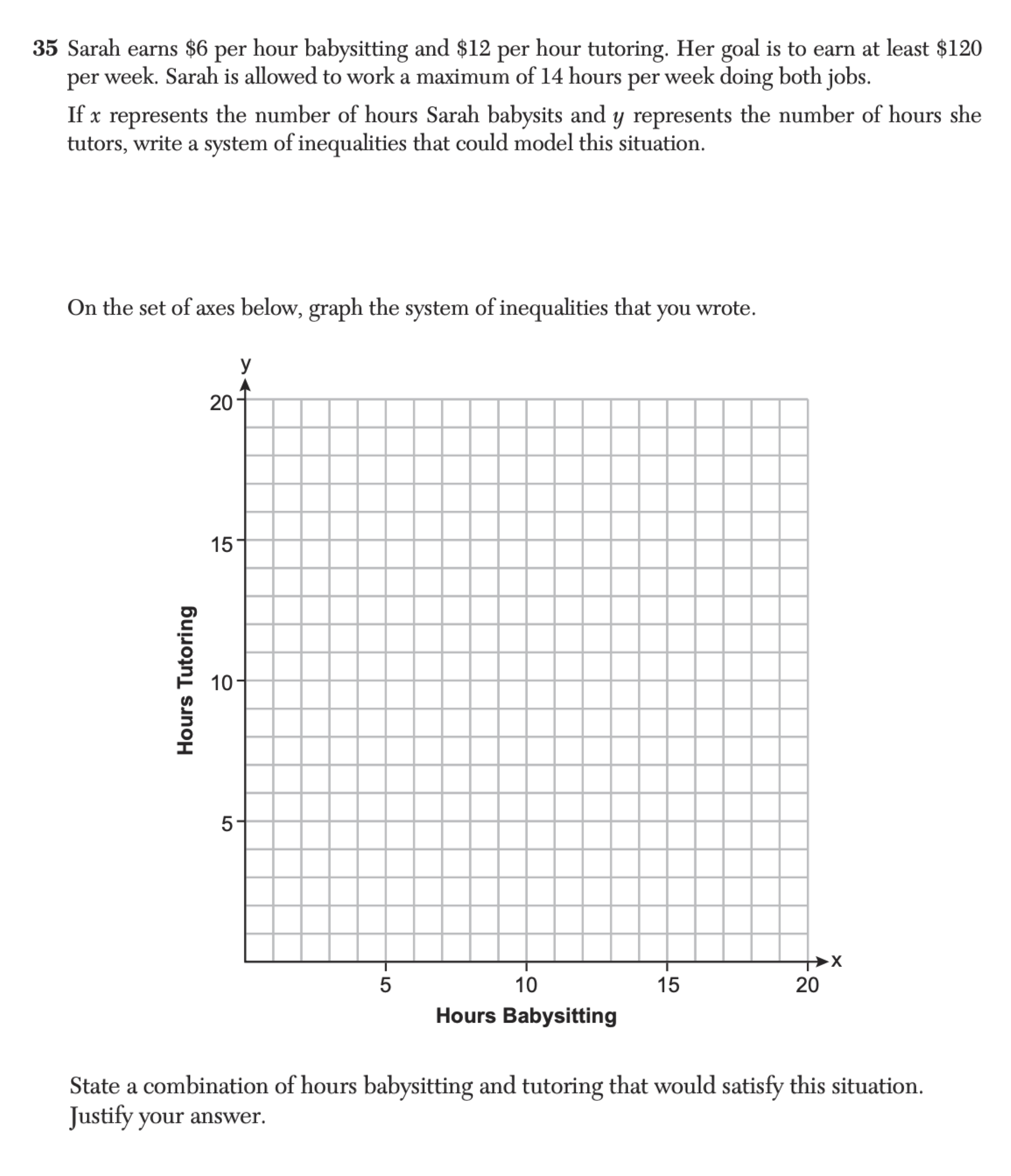
A solution to a system of inequalities is any (x,y) pair that makes both inequalities true, or any pair of values that simultaneously meet both constraints in the situation. The solution to the system is often best represented by a region on a graph.
Suppose there are two numbers, x and y, and there are two things we know about them.
- The value of one number is more than double the value of the other.
- The sum of the two numbers is less than 10.
We can represent these constraints with a system of inequalities.
{y>2xx+y<10
There are many possible pairs of numbers that meet the first constraint, for example: 1 and 3, or 4 and 9.
The same can be said about the second constraint, for example: 1 and 3, or 2.4 and 7.5.
The pair x=1 and y=3 meets both constraints, so it is a solution to the system.
The pair x=4 and y=9 meets the first constraint but not the second (9>2(4) is a true statement, but 4+9<10 is not true.)
Remember that graphing is a great way to show all the possible solutions to an inequality, so let’s graph the solution region for each inequality.
Because we are looking for a pair of numbers that meet both constraints or make both inequalities true at the same time, we want to find points that are in the solution regions of both graphs.
To do that, we can graph both inequalities on the same coordinate plane.
The solution set to the system of inequalities is represented by the region where the two graphs overlap.
Visual / Anchor Chart

Standards
A-REI.6
No additional information available.
A-REI.124 questions
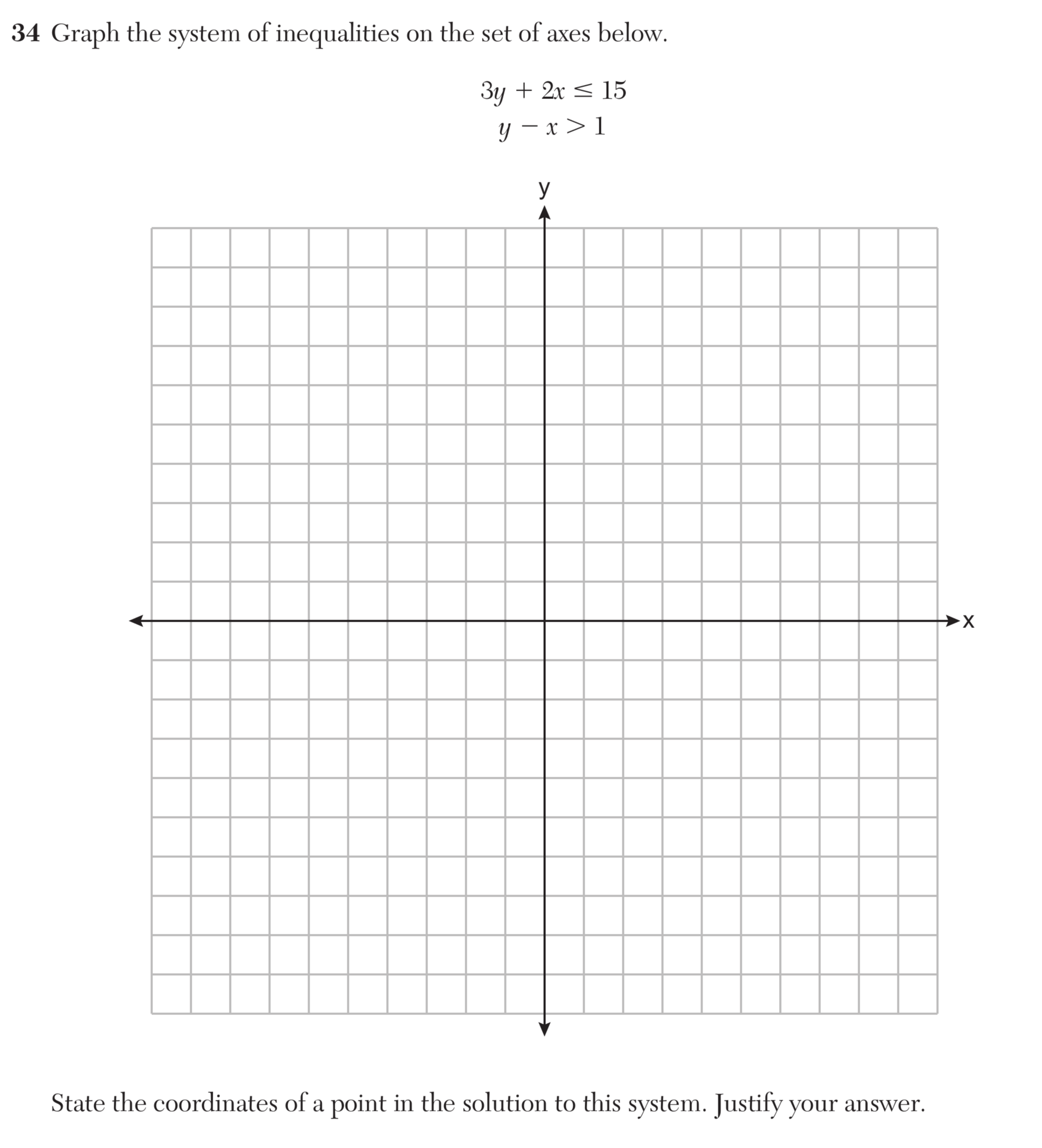
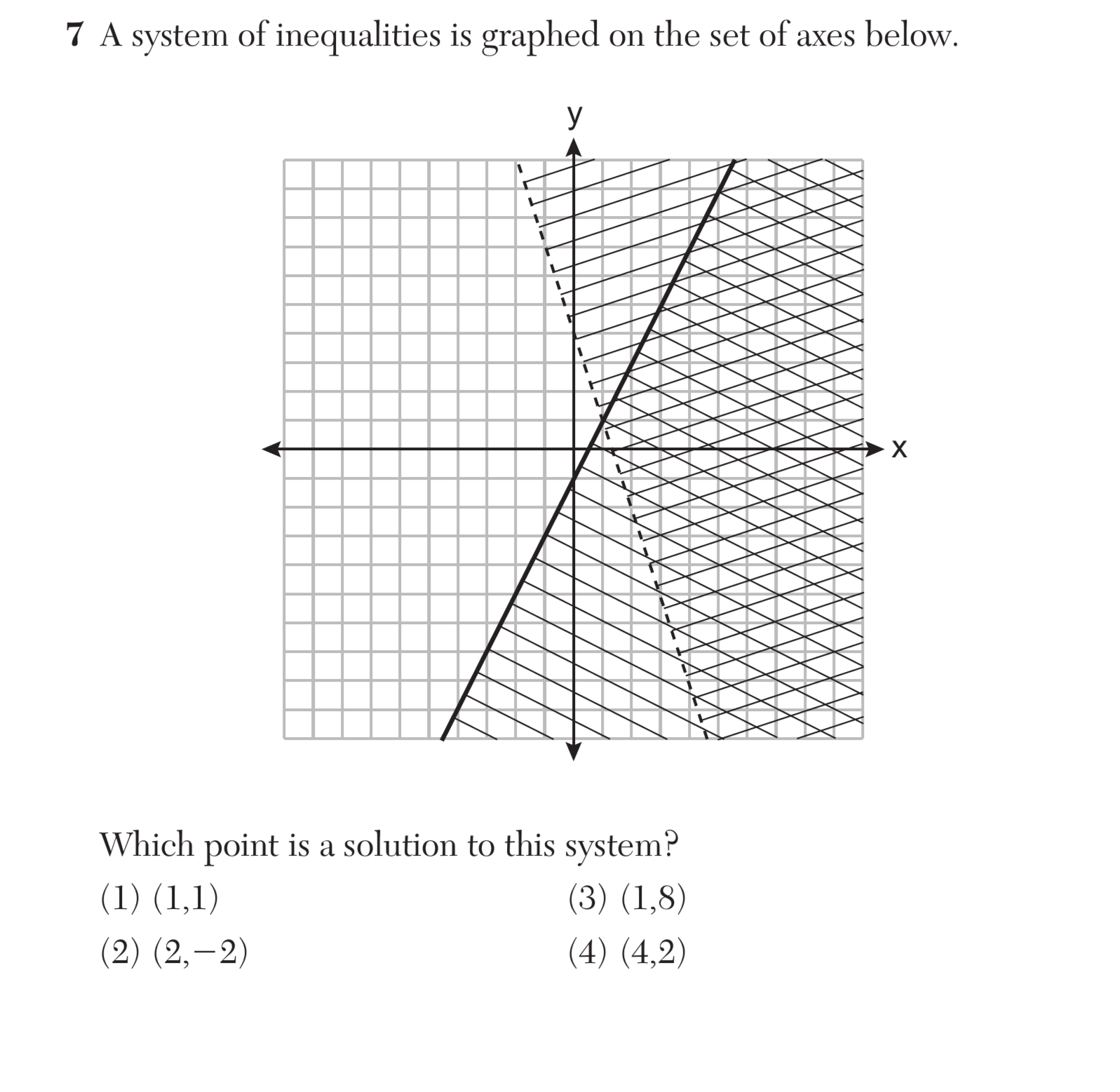
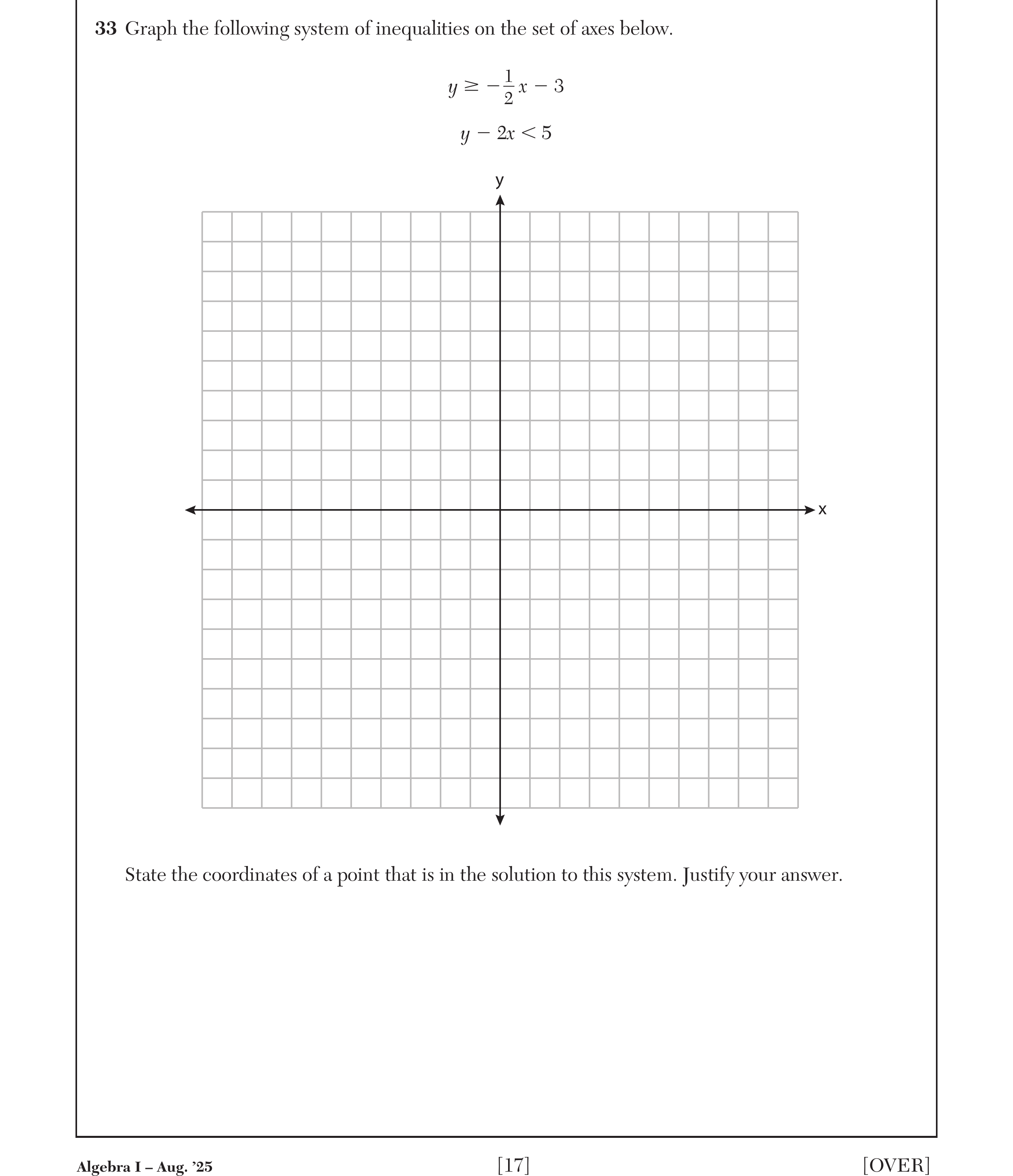
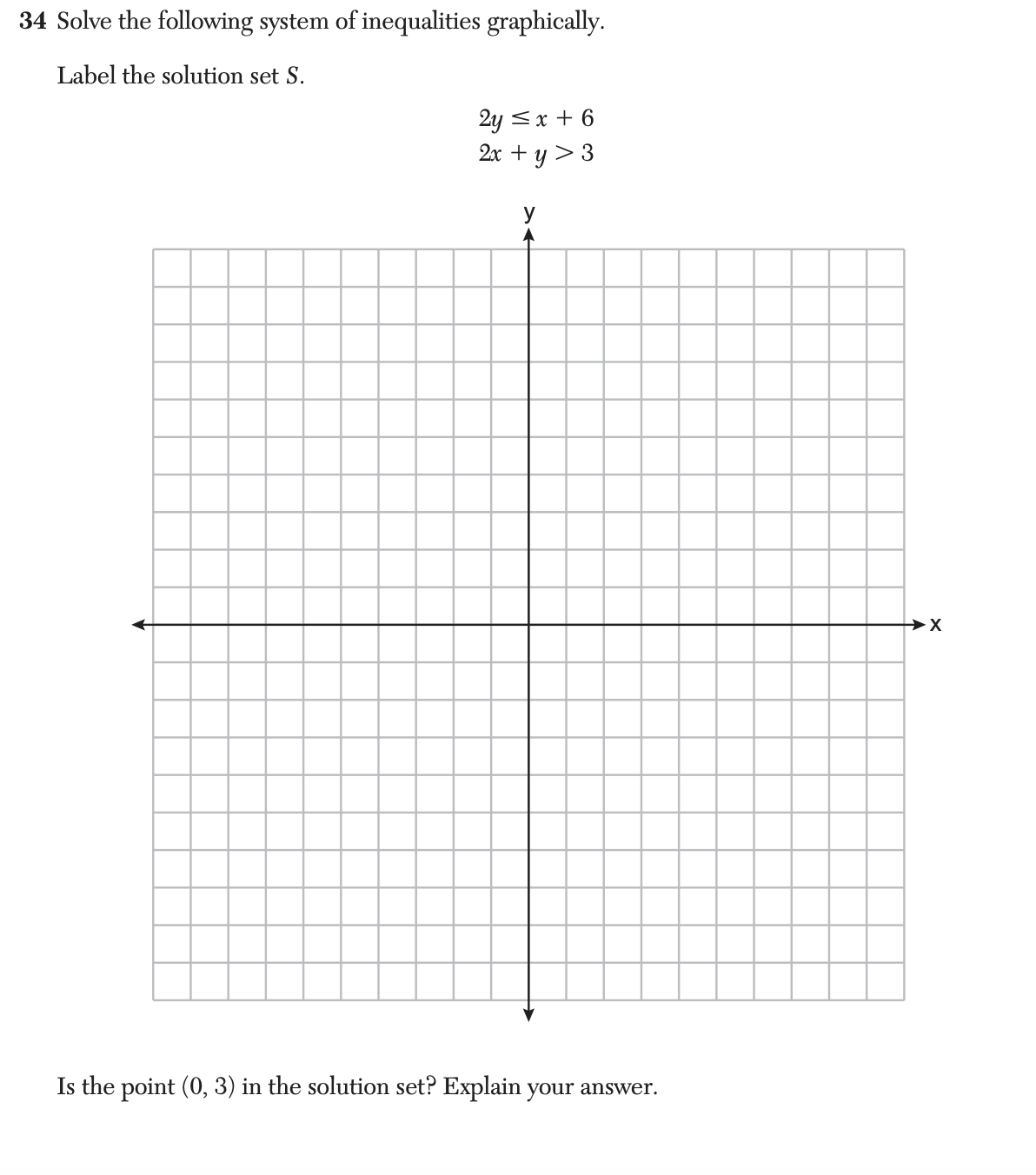
Graph the solutions to a linear inequality in two variables as a half-plane (excluding the boundary in the case of a strict inequality), and graph the solution set to a system of linear inequalities in two variables as the intersection of the corresponding half-planes.
A-CED.36 questions
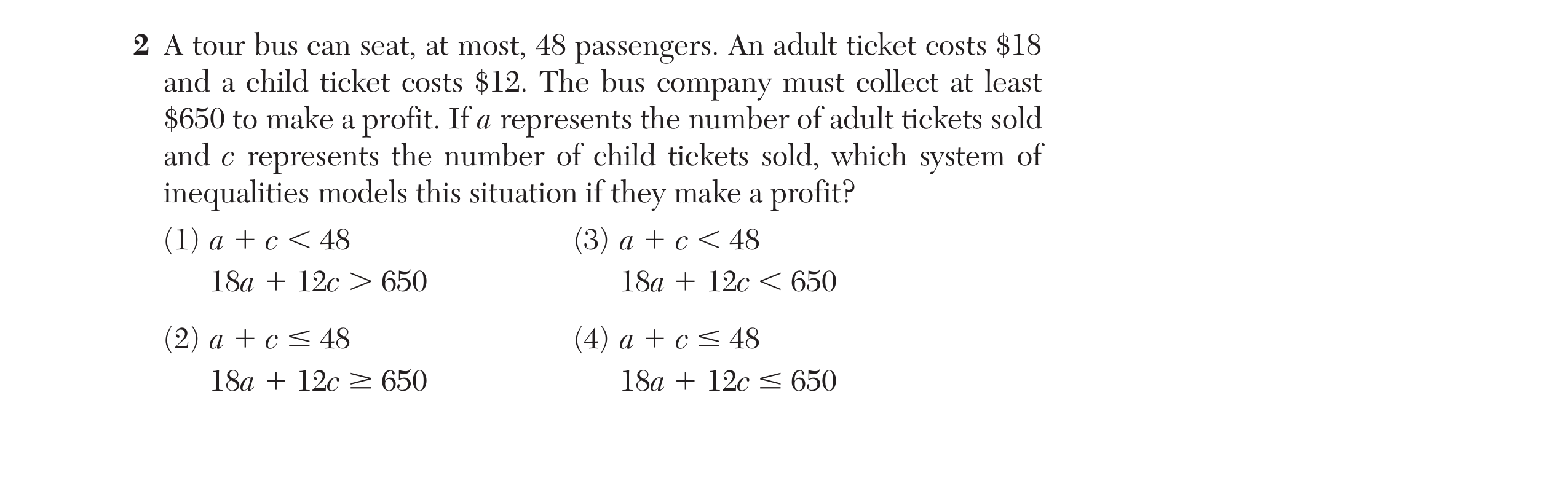
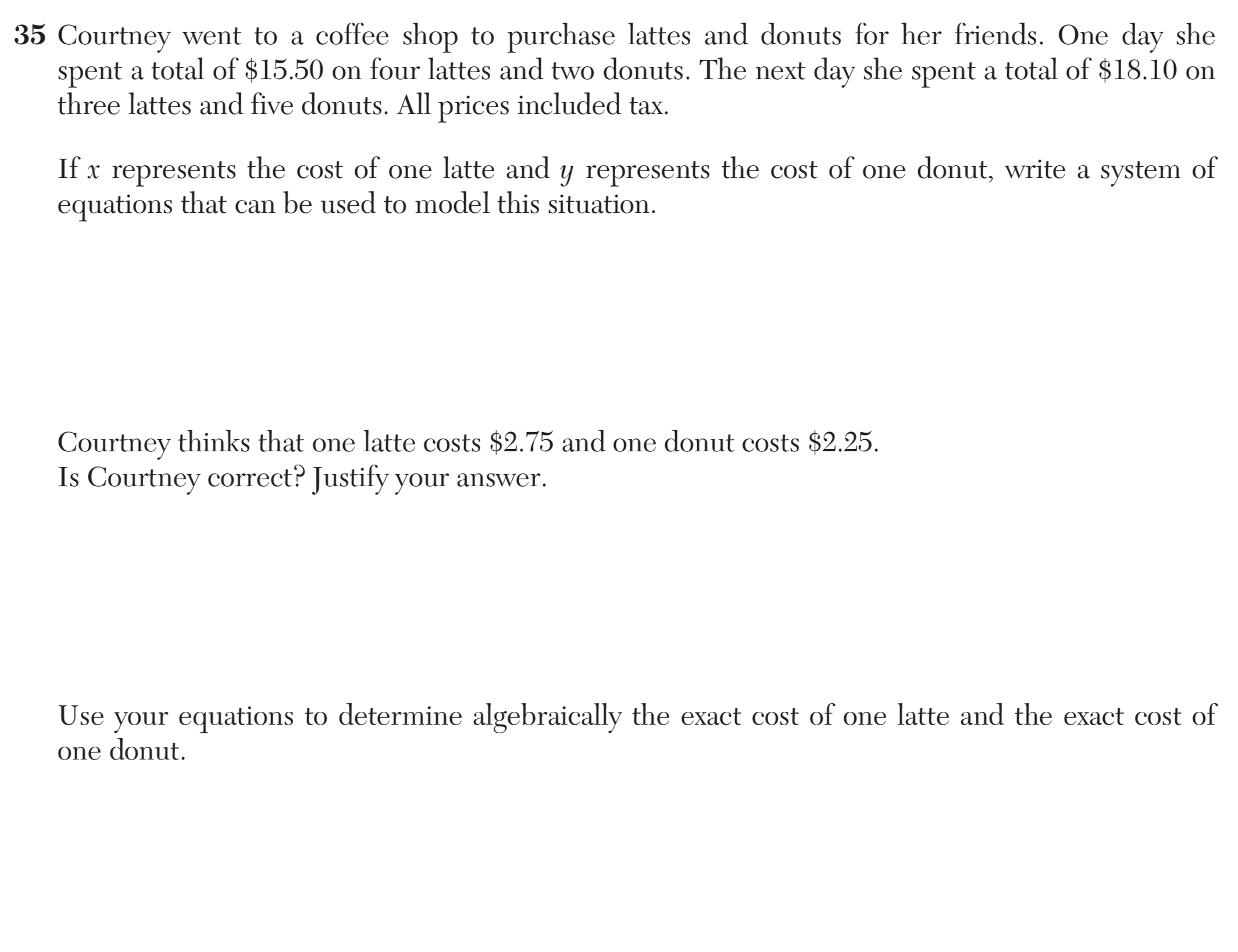
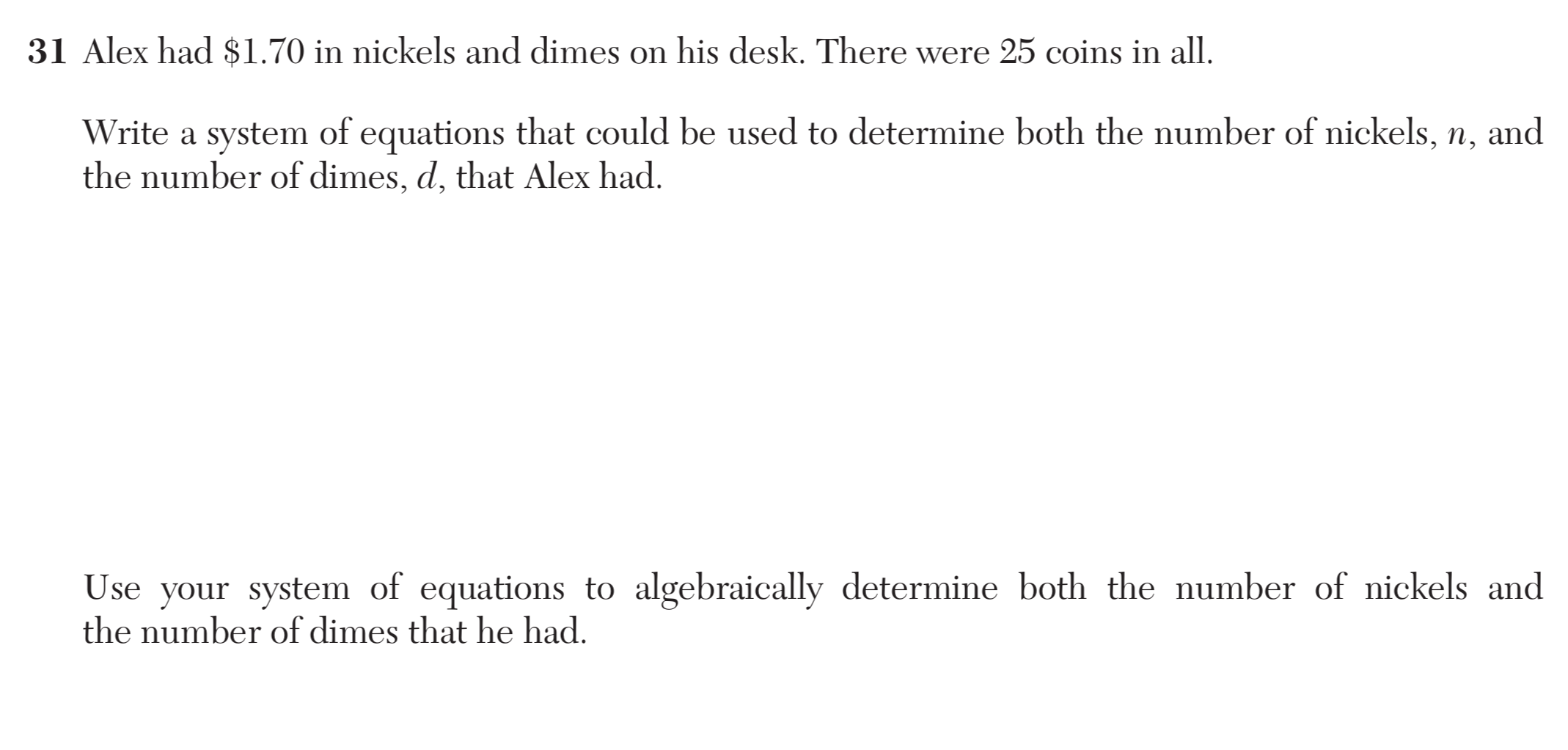
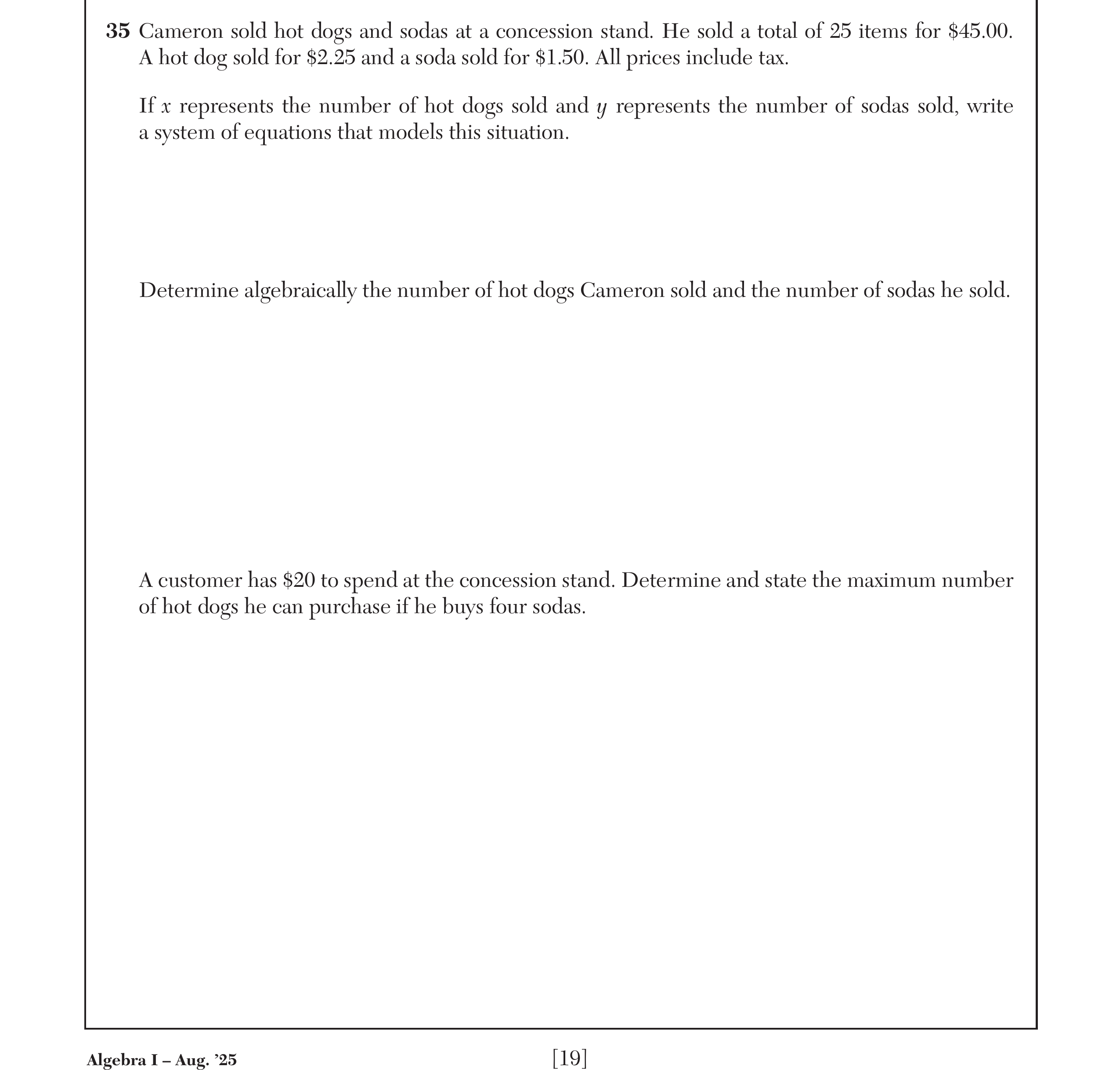
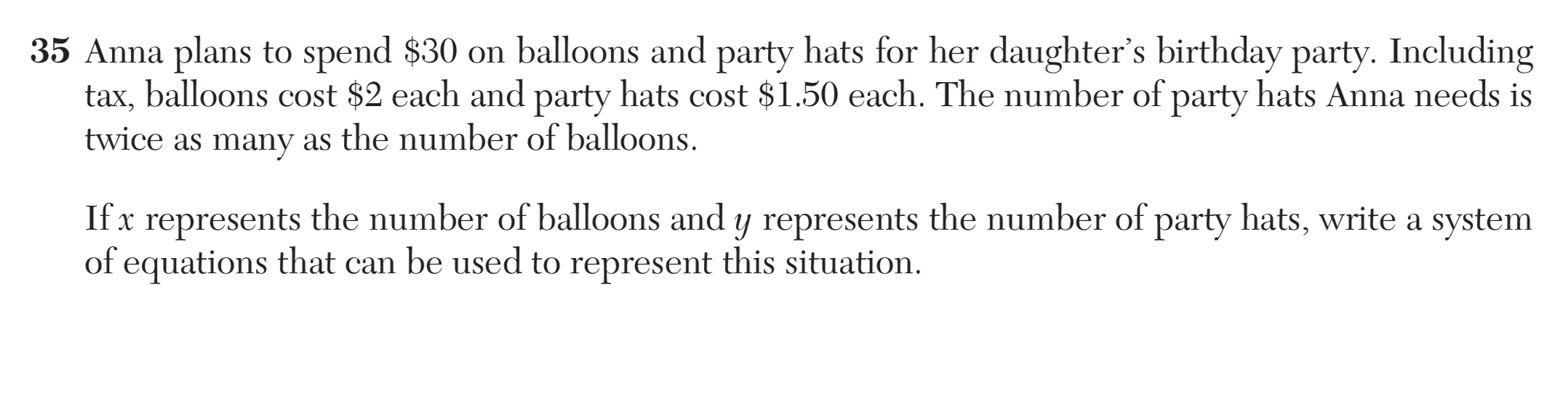
Represent constraints by equations or inequalities, and by systems of equations and/or inequalities, and interpret solutions as viable or non-viable options in a modeling context.
A-REI.124 questions
Graph the solutions to a linear inequality in two variables as a half-plane (excluding the boundary in the case of a strict inequality), and graph the solution set to a system of linear inequalities in two variables as the intersection of the corresponding half-planes.