Comparing Data Sets
Student Summary
To compare data sets, it is helpful to look at the measures of center and measures of variability. The shape of the distribution can help choose the most useful measure of center and measure of variability.
When distributions are symmetric or approximately symmetric, the mean is the preferred measure of center and should be paired with the standard deviation as the preferred measure of variability. When distributions are skewed or when outliers are present, the median is usually a better measure of center and should be paired with the interquartile range (IQR) as the preferred measure of variability.
Once the appropriate measure of center and measure of variability are selected, these measures can be compared for data sets with similar shapes.
For example, let’s compare the number of seconds it takes football players to complete a 40-yard dash at two different positions. First, we can look at a dot plot of the data to see that the tight-end times do not seem distributed symmetrically, so we should probably find the median and IQR for both sets of data to compare information.
The median and IQR could be computed from the values, but can also be determined from a box plot.
This shows that the tight-end times have a greater median (about 4.9 seconds) compared to the median of wide-receiver times (about 4.5 seconds). The IQR is also greater for the tight-end times (about 0.5 seconds) compared to the IQR for the wide-receiver times (about 0.25 seconds).
This means that the tight ends tend to be slower in the 40-yard dash when compared to the wide receivers. The tight ends also have greater variability in their times. Together, this can be taken to mean that, in general, a typical wide receiver is faster than a typical tight end is, and the wide receivers tend to have more similar times to one another than the tight ends do to one another.
Visual / Anchor Chart

Standards
HSS-ID.A.13 questions
Represent data with plots on the real number line (dot plots, histograms, and box plots).
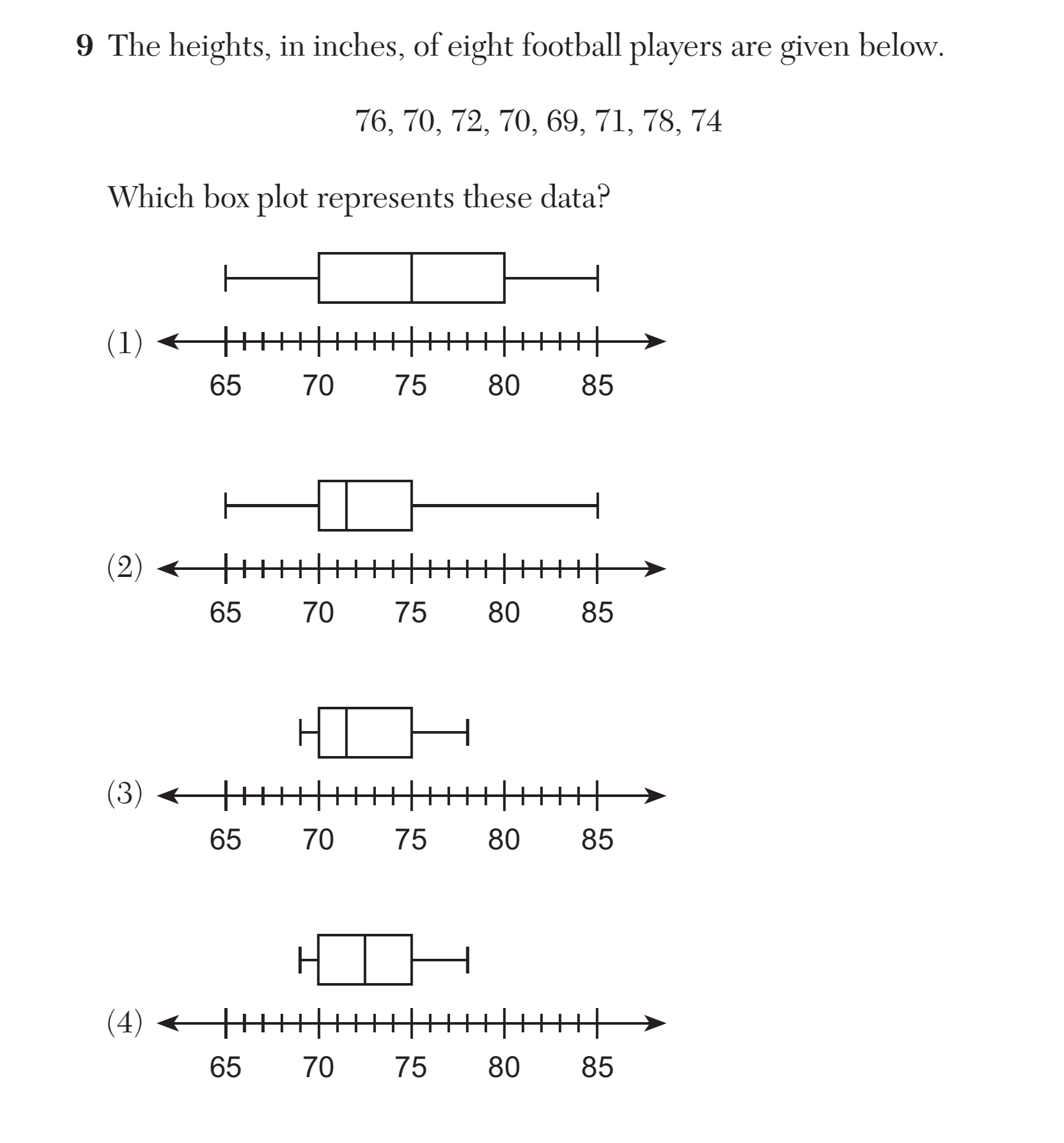
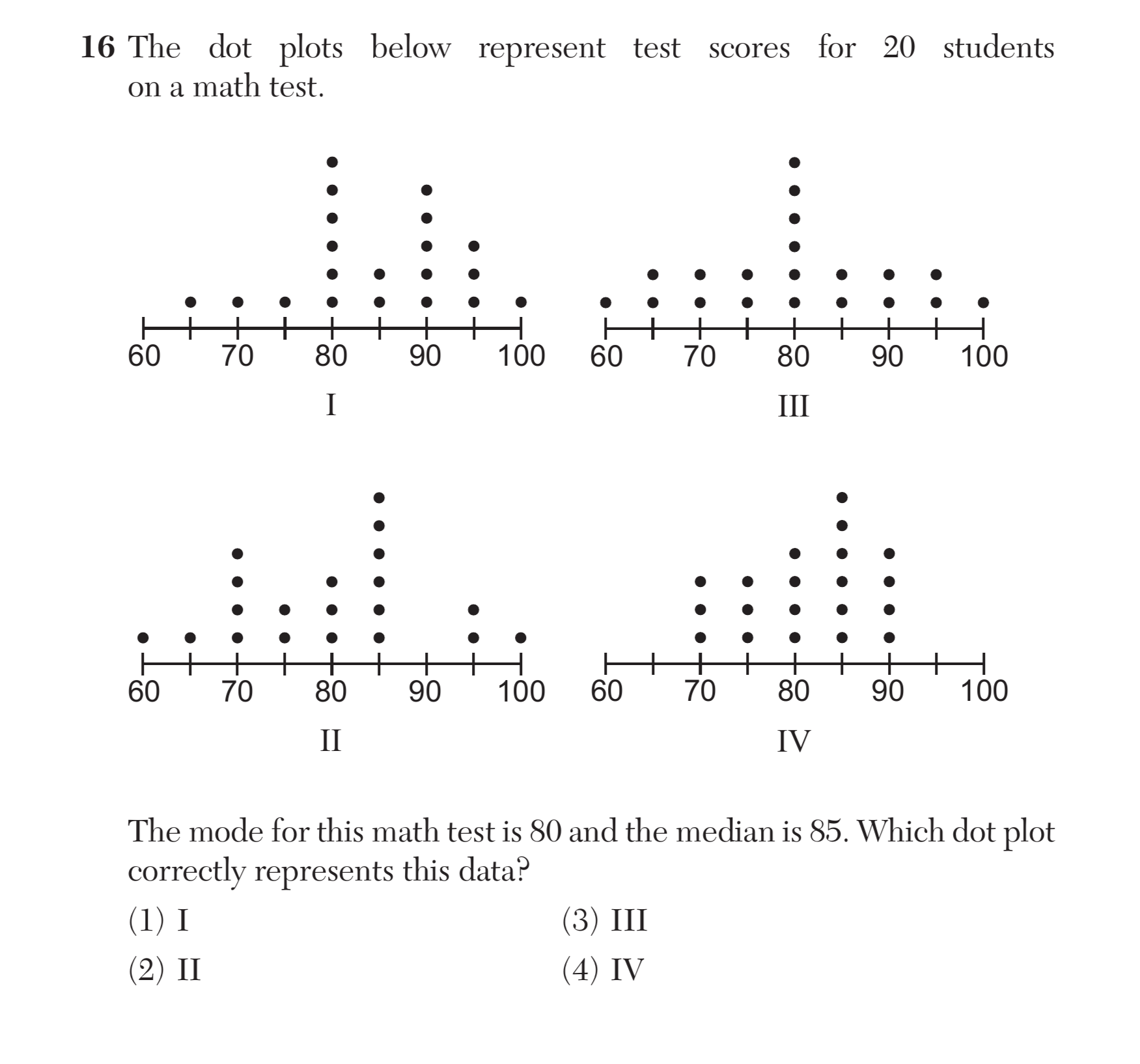
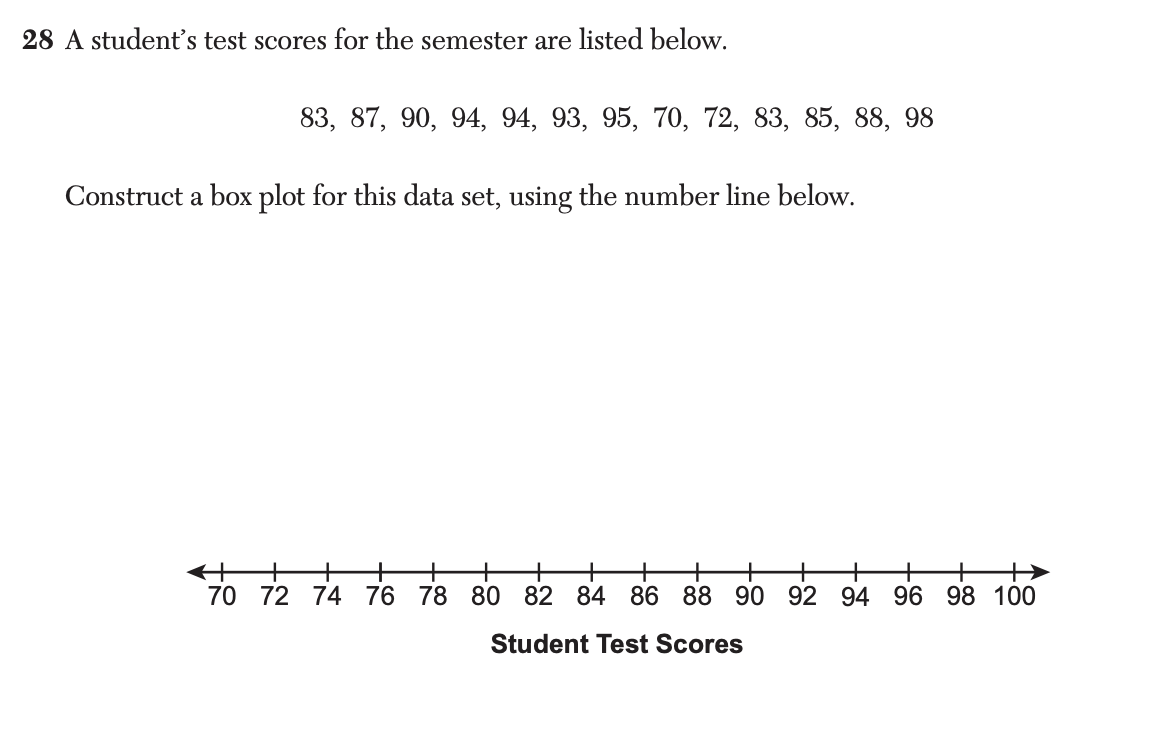
HSS-ID.A.13 questions
Represent data with plots on the real number line (dot plots, histograms, and box plots).
HSS-ID.A.26 questions
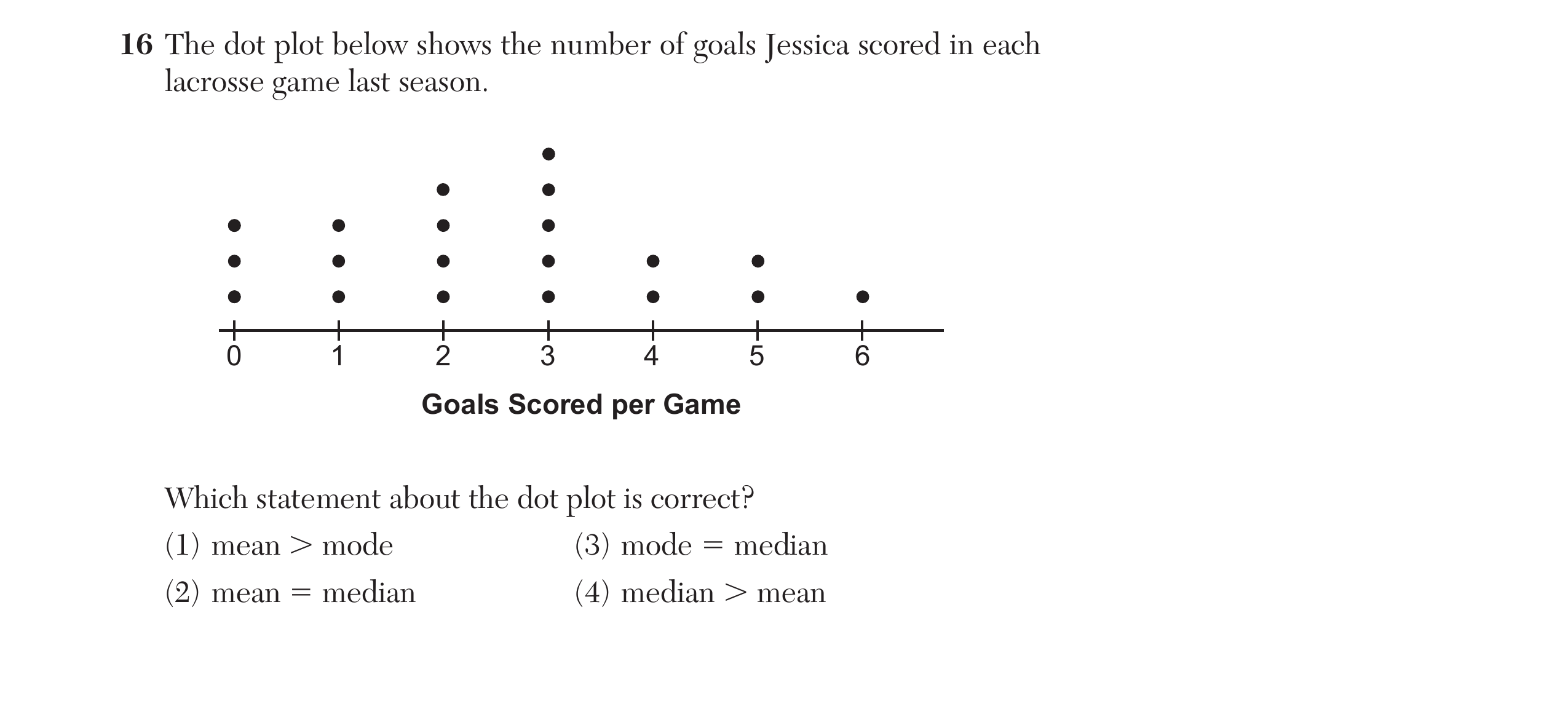
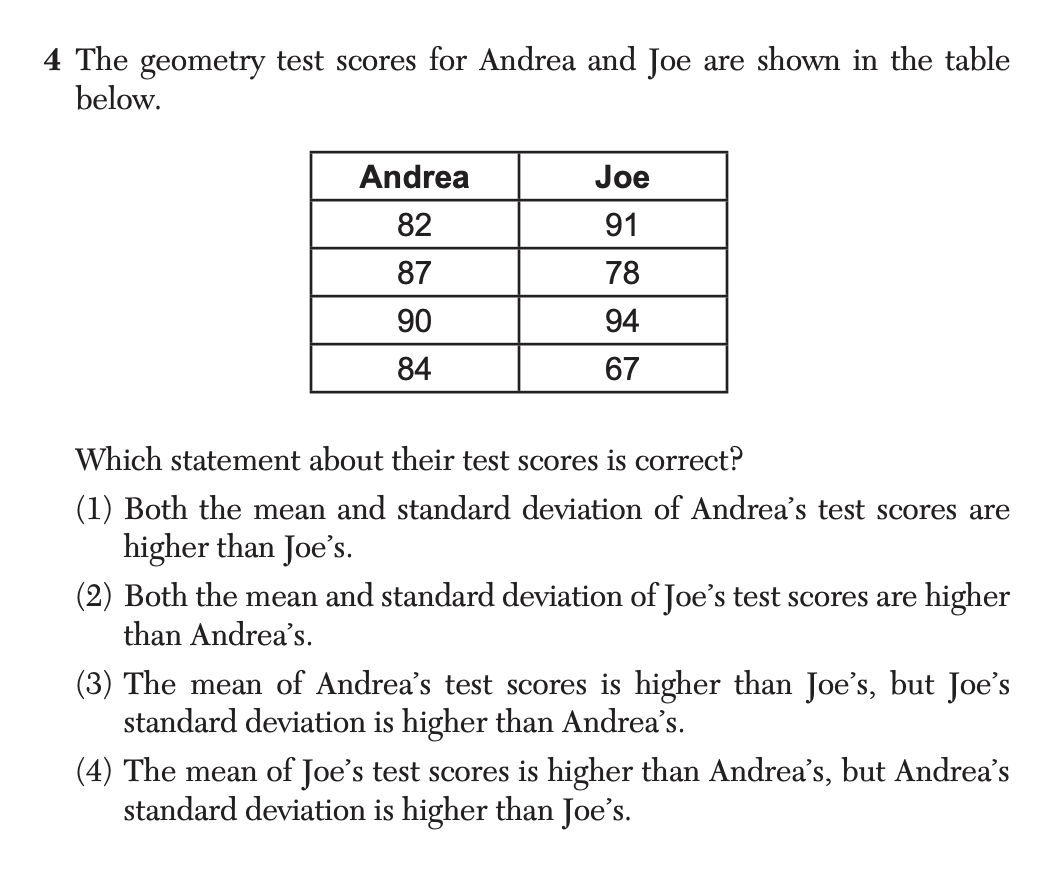
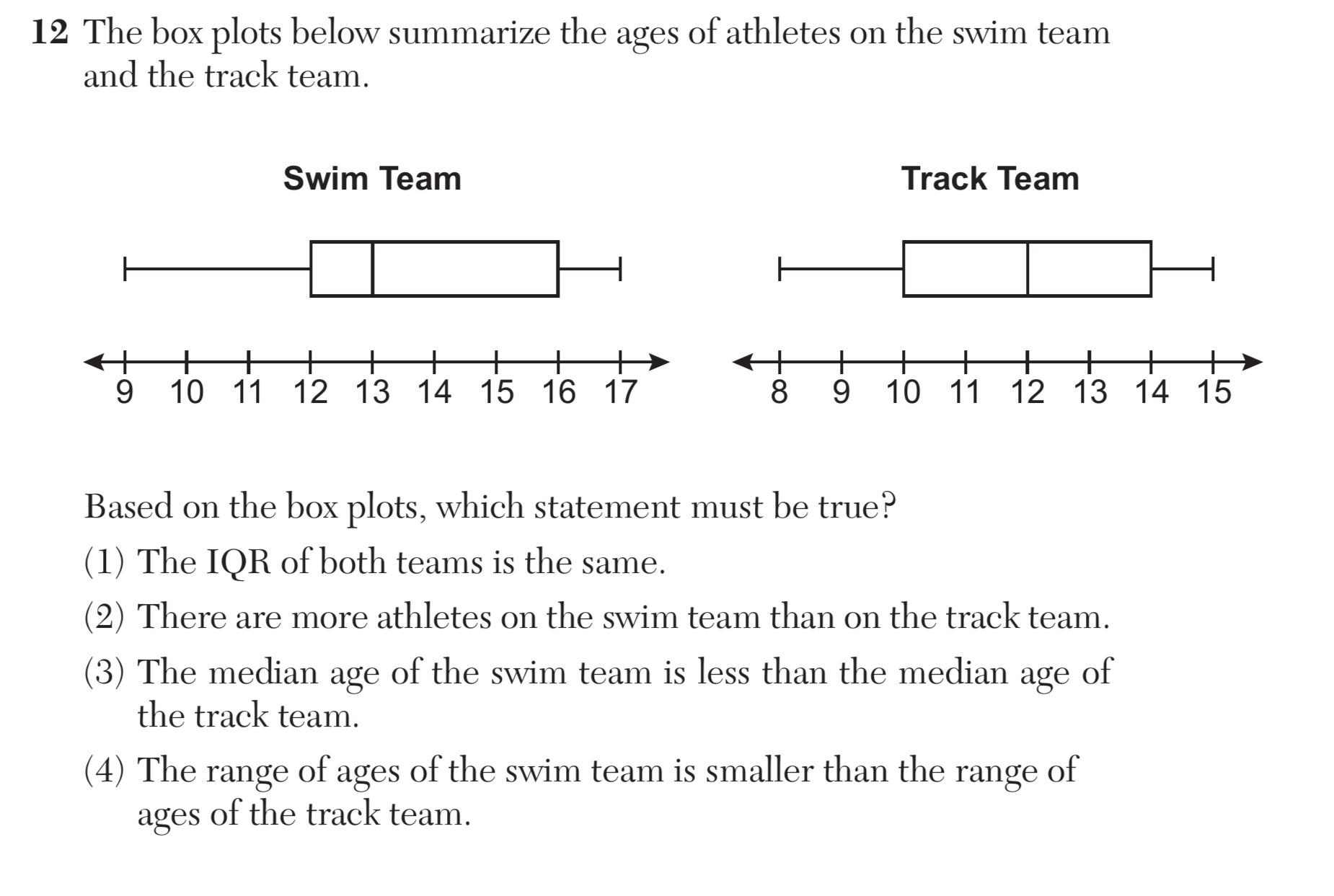
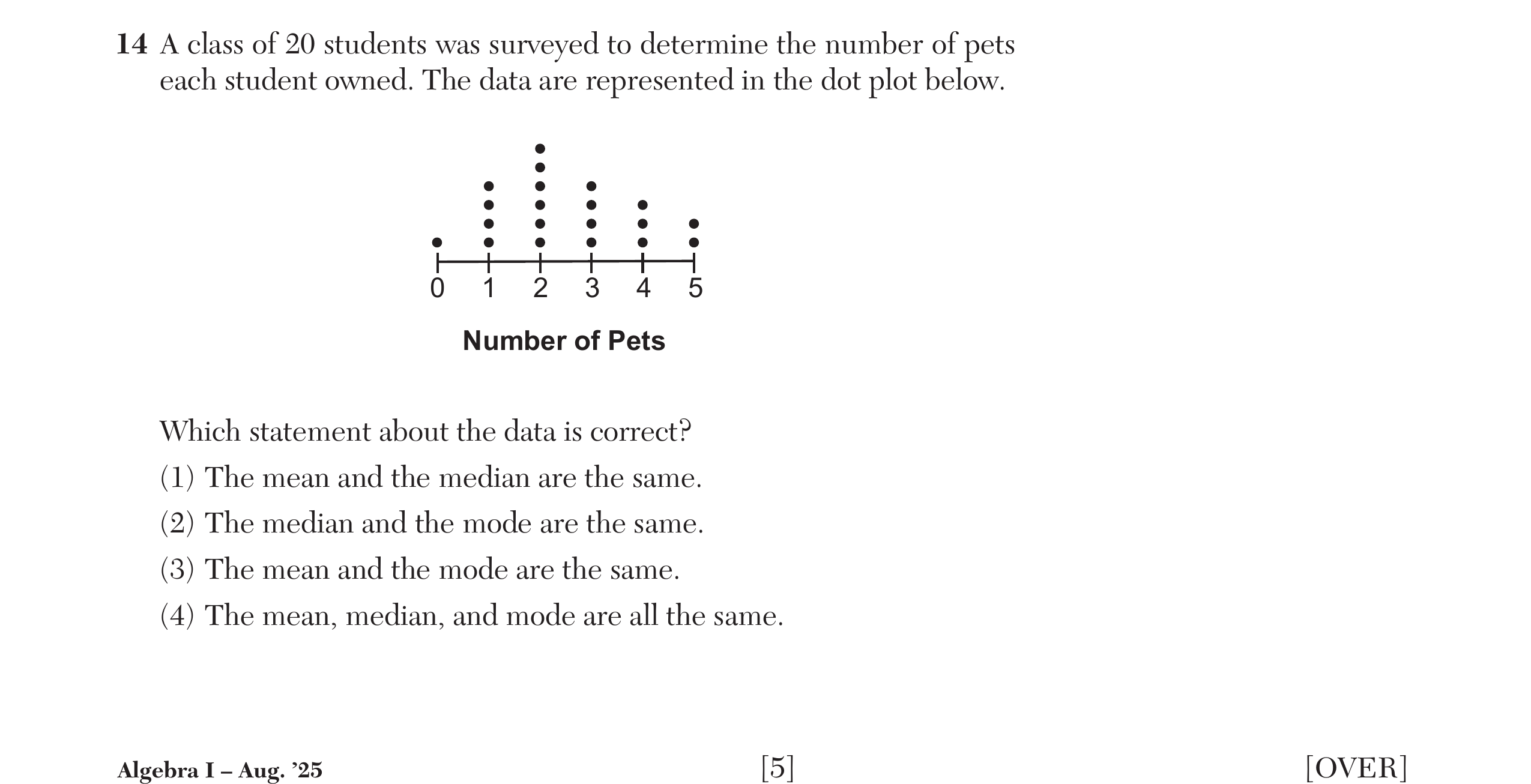
Use statistics appropriate to the shape of the data distribution to compare center (median, mean) and spread (inter-quartile range, sample standard deviation) of two or more different data sets.
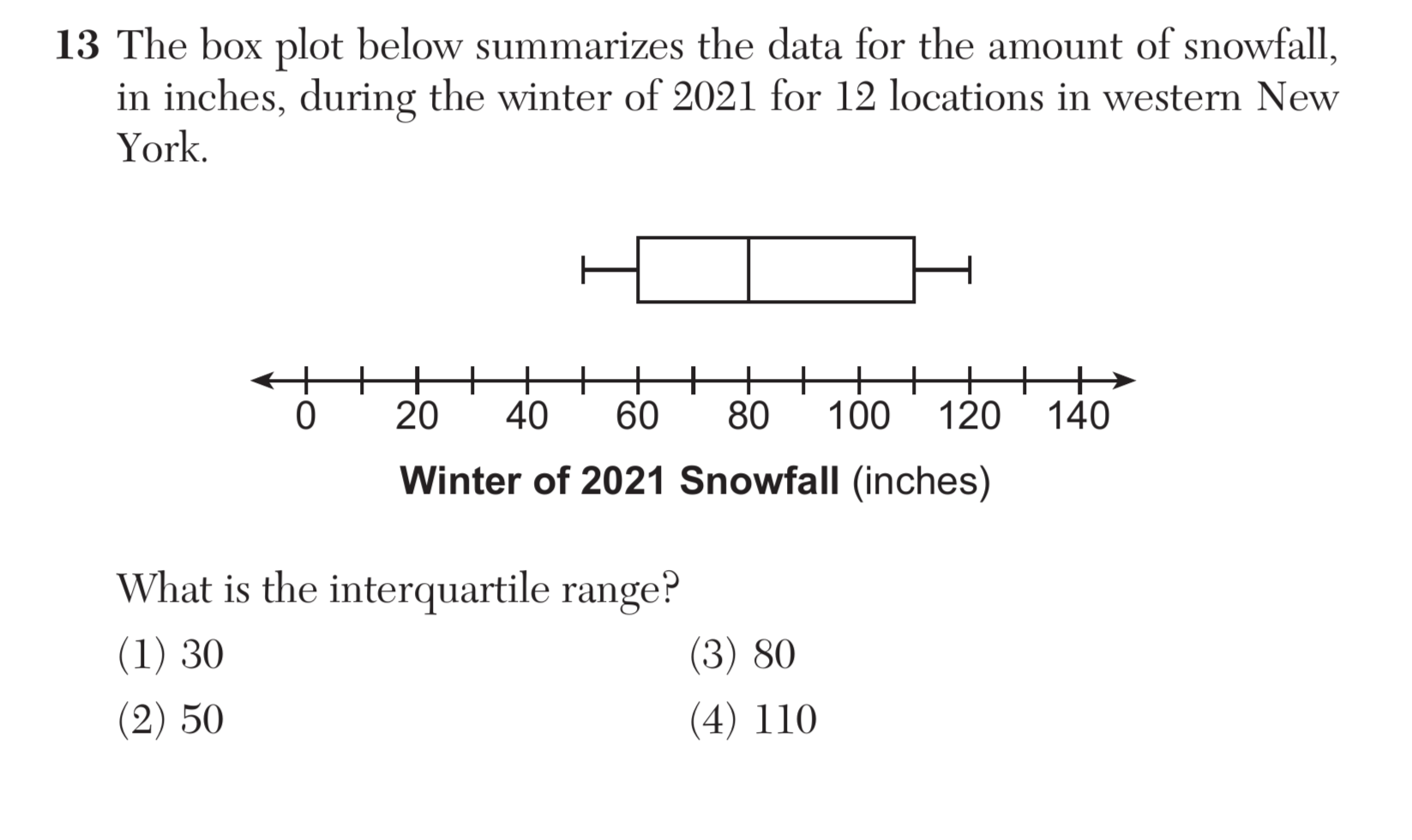
HSS-ID.A.26 questions
Use statistics appropriate to the shape of the data distribution to compare center (median, mean) and spread (inter-quartile range, sample standard deviation) of two or more different data sets.