Domain and Range (Part 1)
Student Summary
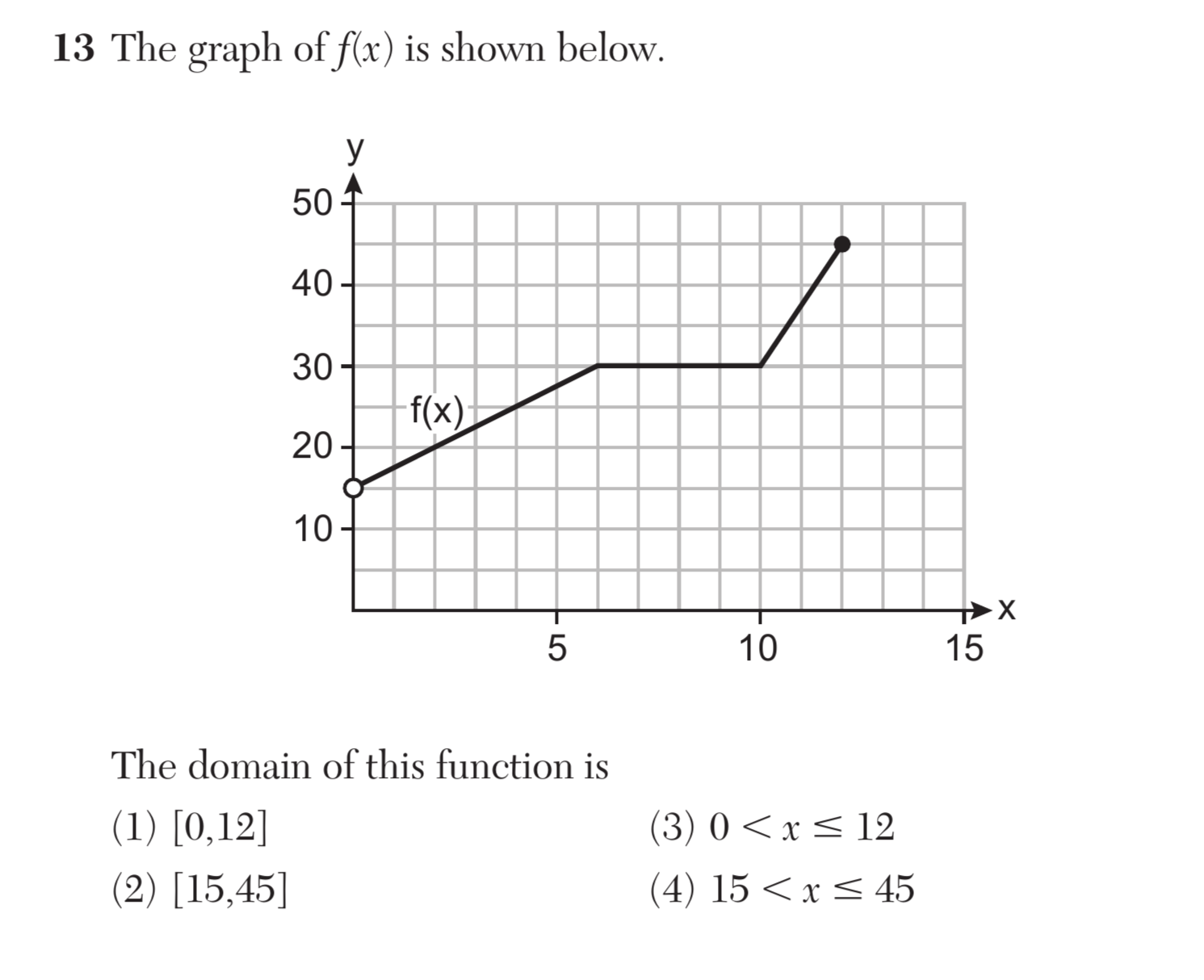
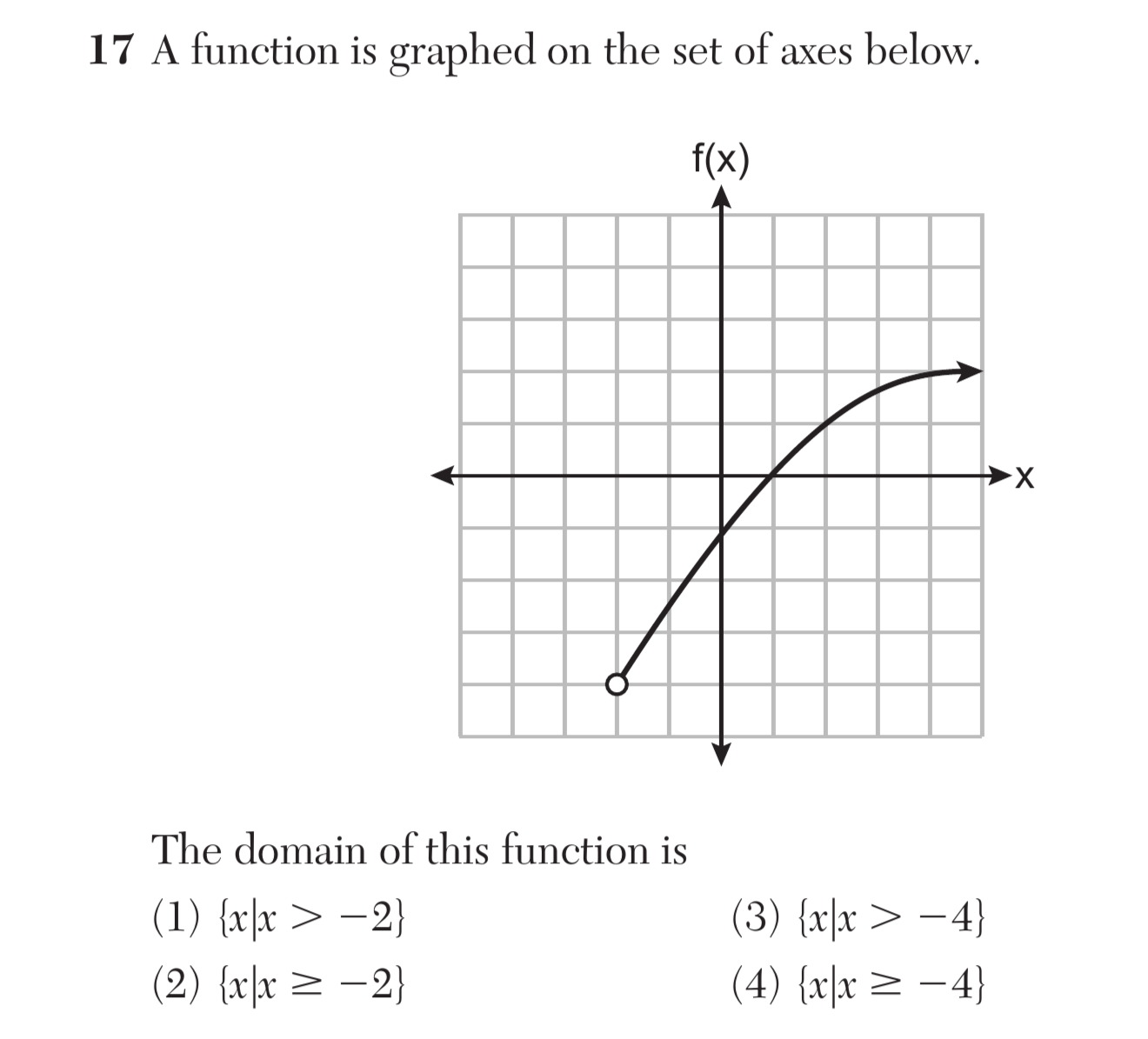
The domain of a function is the set of all possible input values. Depending on the situation represented, a function may take all numbers as its input or only a limited set of numbers.
-
Function A gives the area of a square, in square centimeters, as a function of its side length, s, in centimeters.
- The input of A can be 0 or any positive number, such as 4, 7.5, or 319. It cannot include negative numbers because lengths cannot be negative.
- The domain of A includes 0 and all positive numbers (or s≥0).
-
Function q gives the number of buses needed for a school field trip as a function of the number of people, n, going on the trip.
- The input of q can be 0 or positive whole numbers because a negative or fractional number of people doesn’t make sense.
- The domain of q includes 0 and all positive whole numbers. If the number of people at a school is 120, then the domain is limited to all non-negative whole numbers up to 120 (or 0≤n≤120).
-
Function v gives the total number of visitors to a theme park as a function of days, d, since a new attraction opened to the public.
- The input of v can be positive or negative. A positive input means days since the attraction opened, and a negative input means days before the attraction opened.
- The input can also be whole numbers or fractional. The statement v(17.5) refers to 17.5 days after the attraction opened.
- The domain of v includes all numbers. If the theme park had opened exactly one year before the new attraction opened, then the domain would be all numbers greater than or equal to -365 (or d≥-365).
The range of a function is the set of all possible output values. Once we know the domain of a function, we can determine the range that makes sense in the situation.
- The output of function A is the area of a square in square centimeters, which cannot be negative but can be 0 or greater, not limited to whole numbers. The range of A is 0 and all positive numbers.
- The output of q is the number of buses, which can only be 0 or positive whole numbers. If there are 120 people at the school, however, and if each bus could seat 30 people, then only up to 4 buses are needed. The range that makes sense in this situation would be any whole number that is at least 0 and at most 4.
- The output of function v is the number of visitors, which cannot be fractional or negative. The range of v, therefore, includes 0 and all positive whole numbers.
Visual / Anchor Chart

Standards
F-IF.52 questions
Determine the domain of a function from its graph and, where applicable, identify the appropriate domain for a function in context.
F-IF.B
No additional information available.