Writing Equations to Model Relationships (Part 2)
Student Summary
Sometimes, the relationship between two quantities is easy to see. For instance, we know that the perimeter of a square is always 4 times the side length of the square. If P represents the perimeter and s represents the side length, then the relationship between the two measurements (in the same unit) can be expressed as P=4s, or s=4P.
Other times, the relationship between quantities might take a bit of work to figure out—by doing calculations several times or by looking for a pattern. Here are two examples.
- A plane departed from New Orleans and is heading to San Diego. The table shows its distance from New Orleans, x, and its distance from San Diego, y, at some points along the way.
miles from New Orleans miles from San Diego 100 1,500 300 1,300 500 1,100 1,020 900 700 1,450 x y What is the relationship between the two distances? Do you see any patterns in how each quantity is changing? Can you find out what the missing values are?
Notice that every time the distance from New Orleans increases by some number of miles, the distance from San Diego decreases by the same number of miles, and that the sum of the two values is always 1,600 miles.
The relationship can be expressed with any of these equations:
x+y=1,600
y=1,600−x
x=1,600−y
-
A company decides to donate $50,000 to charity. It will select up to 20 charitable organizations, as nominated by its employees. Each selected organization will receive an equal amount of donation.
What is the relationship between the number of selected organizations, n, and the dollar amount each of them will receive, d?
- If 5 organizations are selected, each one receives $10,000.
- If 10 organizations are selected, each one receives $5,000.
-
If 20 organizations are selected, each one receives $2,500.
Do you notice a pattern here? 10,000 is 550,000, 5,000 is 1050,000, and 2,500 is 2050,000.
We can generalize that the amount each organization receives is 50,000 divided by the number of selected organizations, or d=n50,000.
Visual / Anchor Chart

Standards
A-CED.21 question
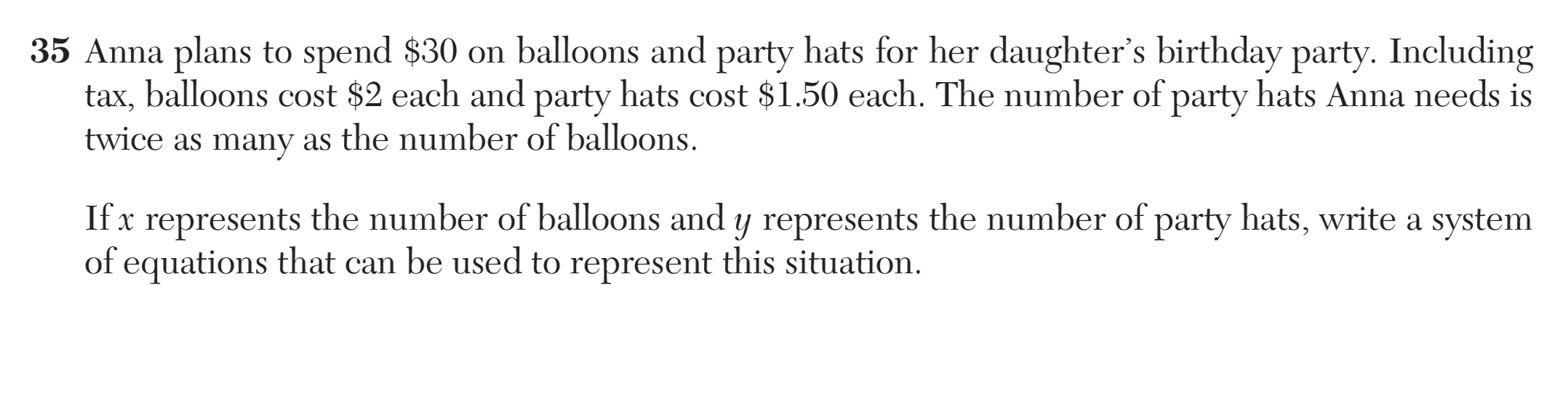
Create equations and linear inequalities in two variables to represent a real-world context.
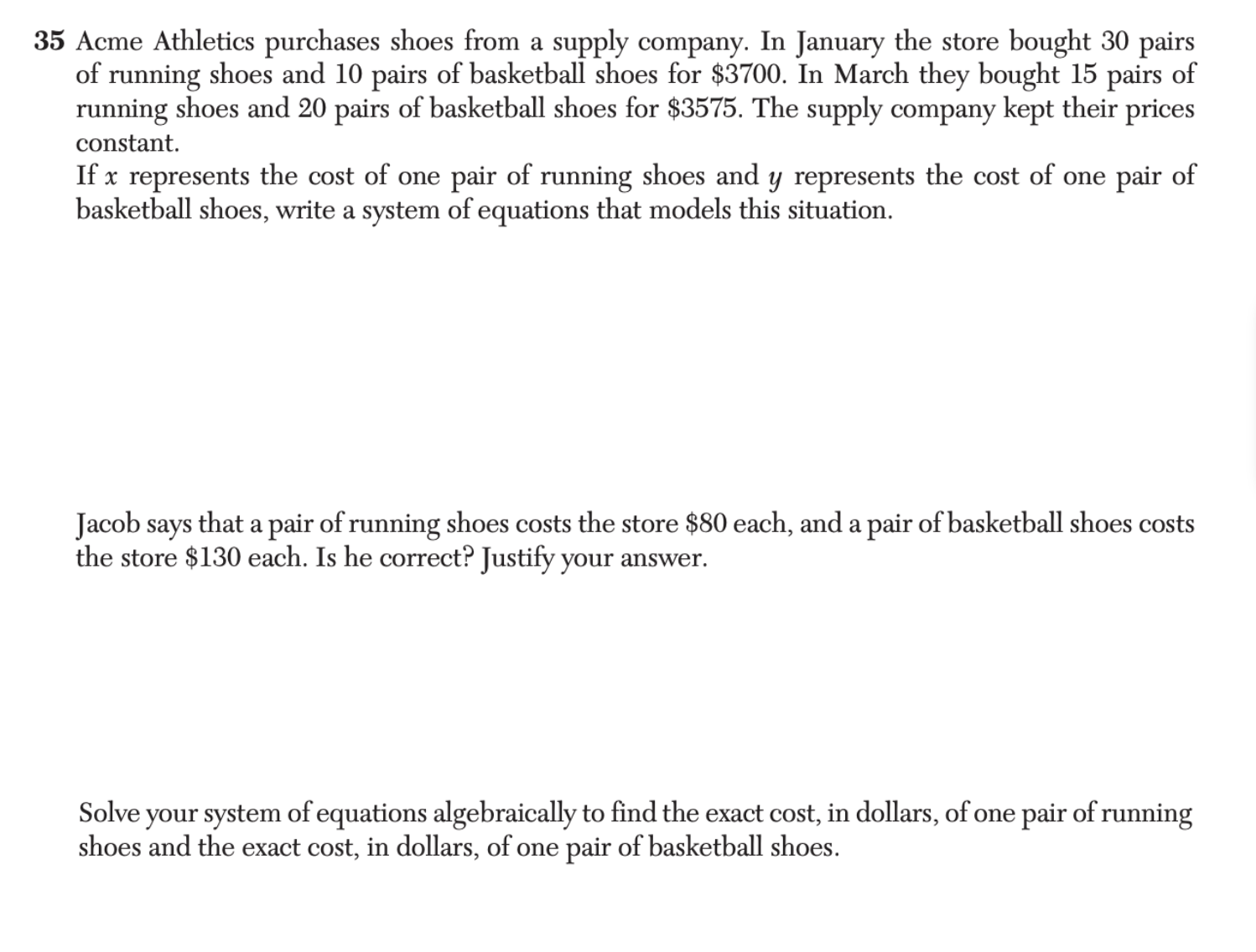
A-CED.36 questions
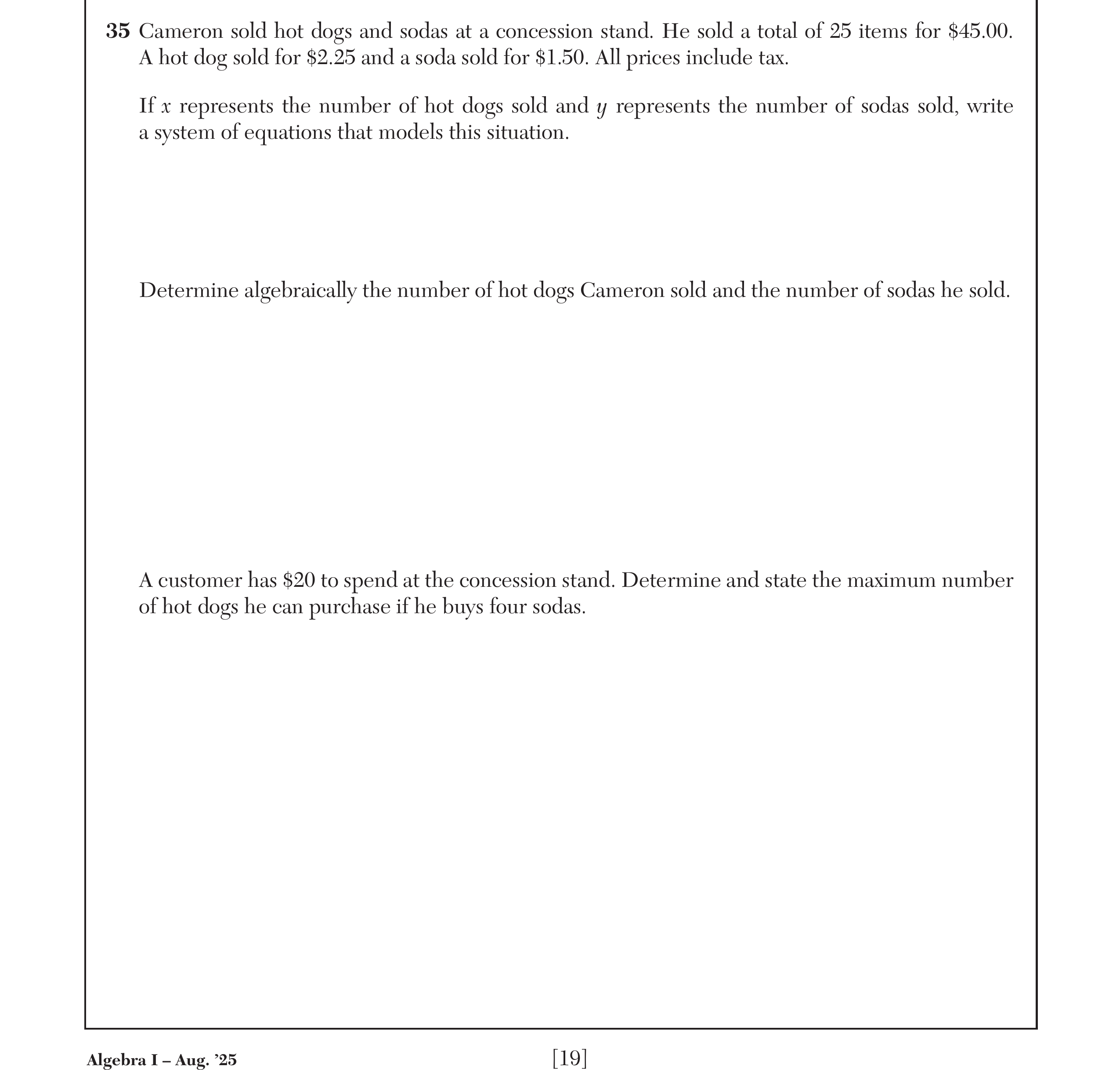
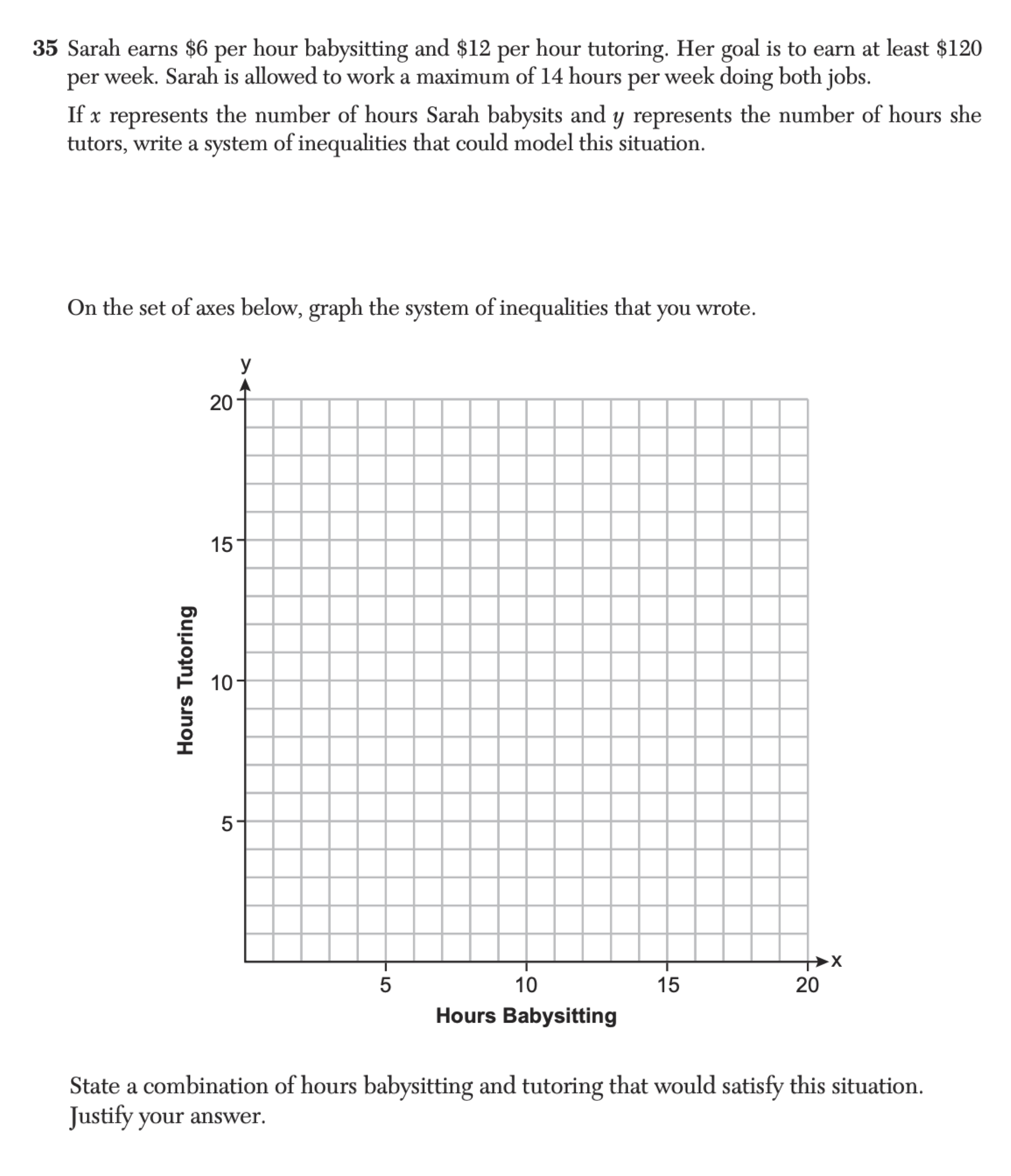
Represent constraints by equations or inequalities, and by systems of equations and/or inequalities, and interpret solutions as viable or non-viable options in a modeling context.
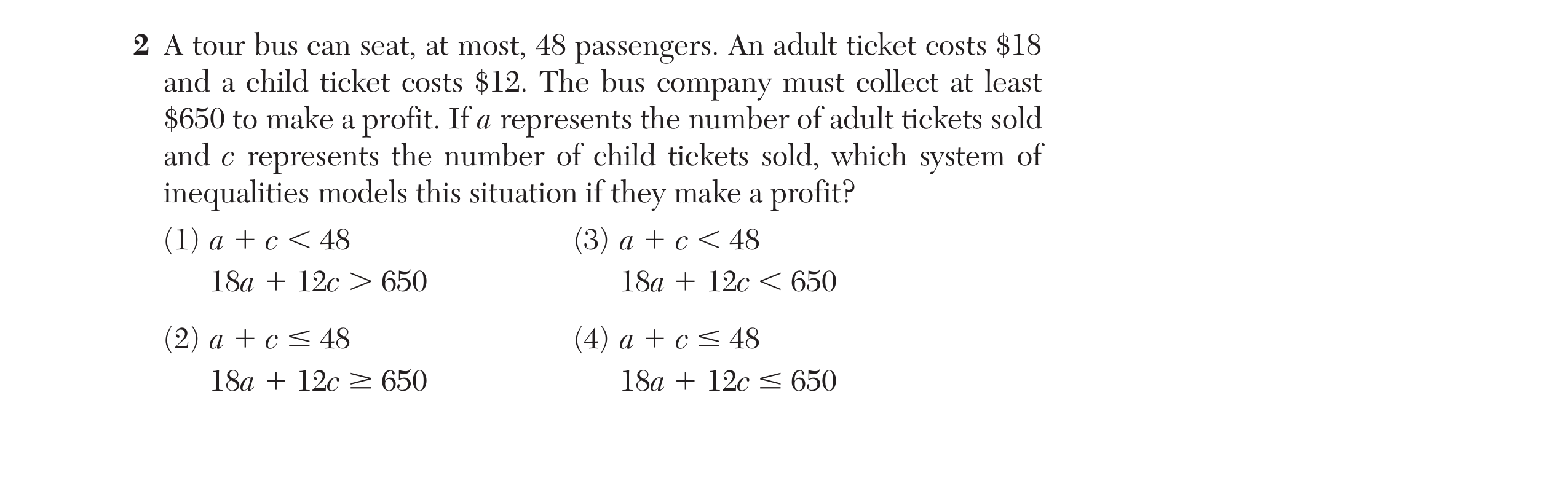
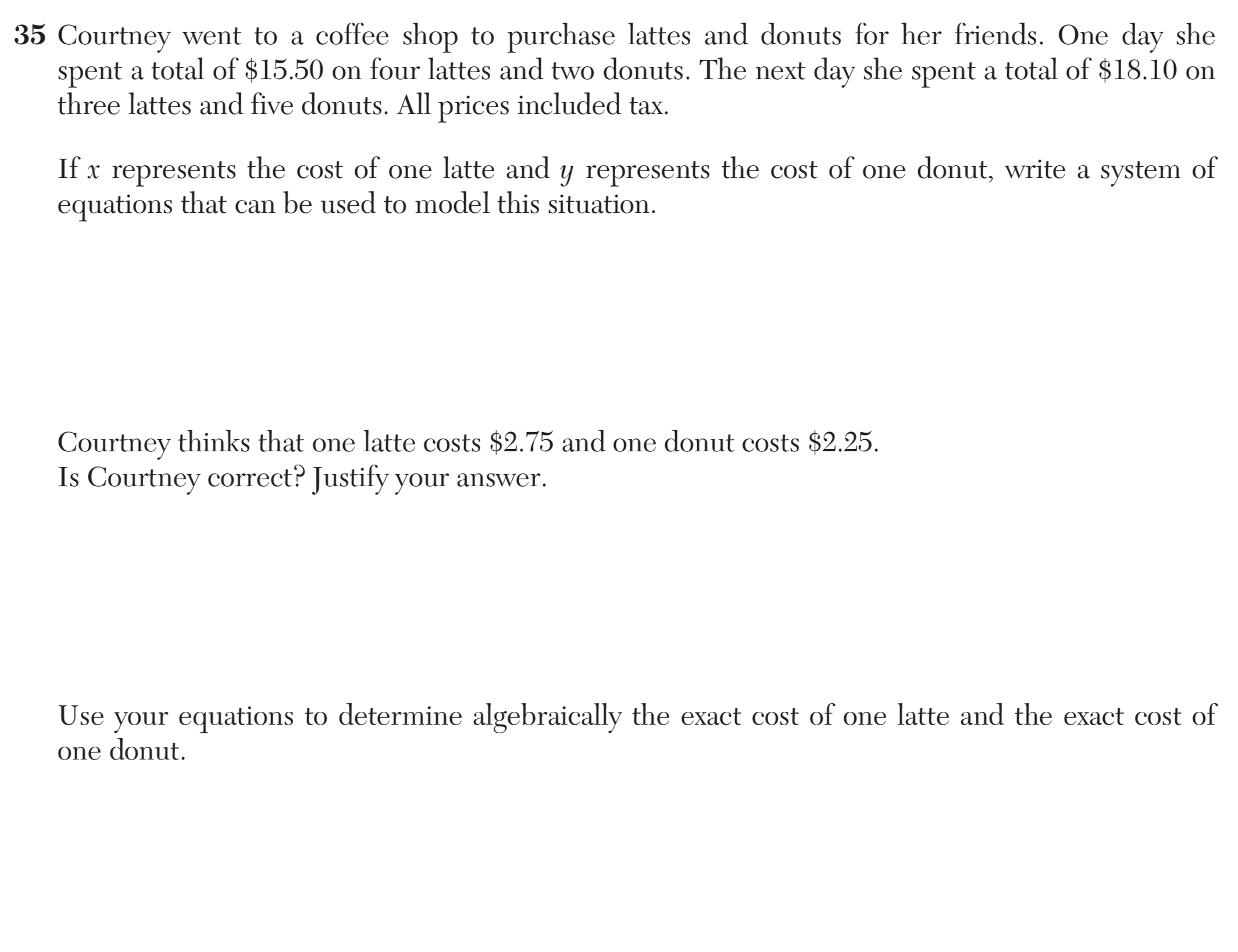
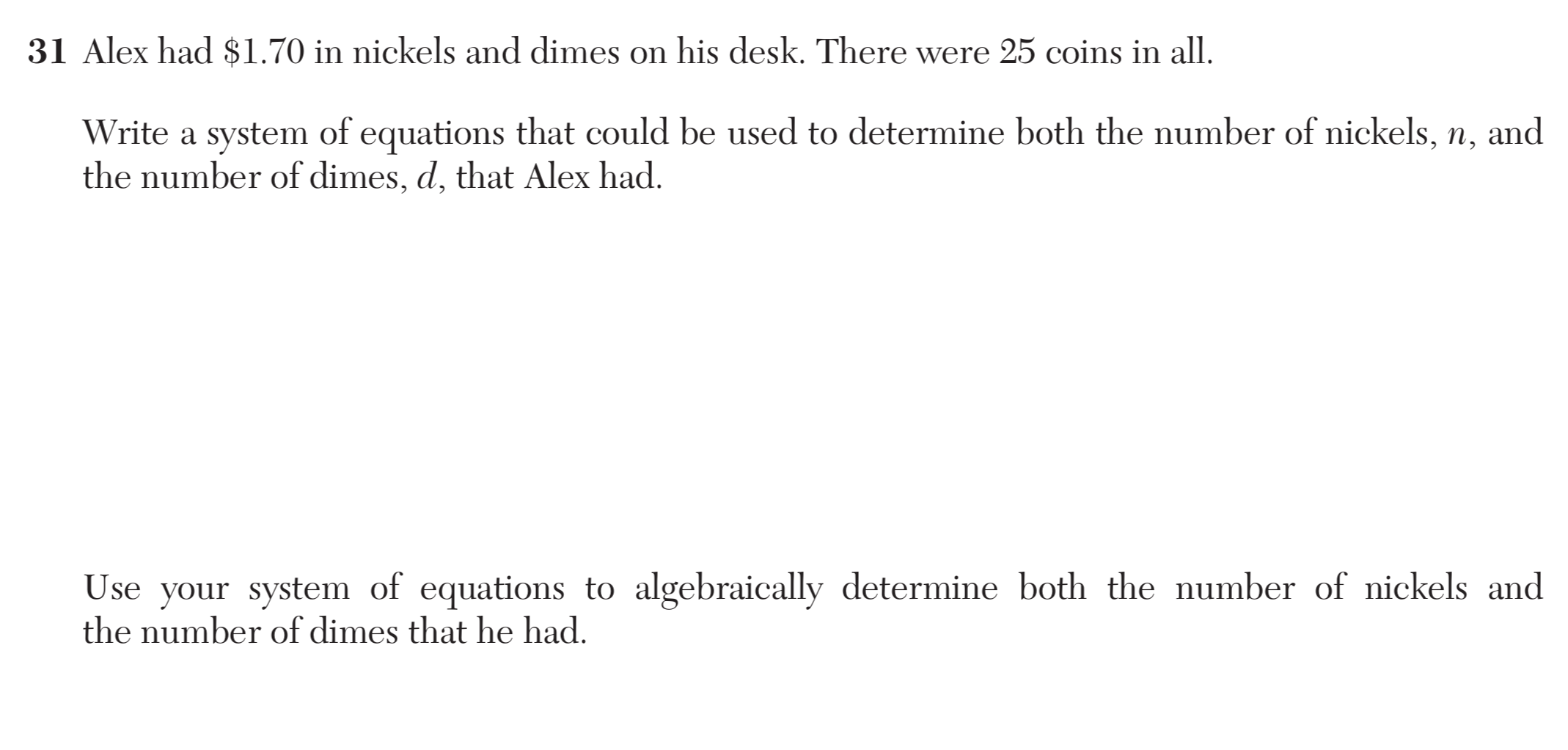
A-CED.21 question
Create equations and linear inequalities in two variables to represent a real-world context.
F-LE.2
No additional information available.