Graphing the Standard Form (Part 2)
Student Summary
In an earlier lesson, we saw that a quadratic function written in standard form, ax2+bx+c, can tell us some things about the graph that represents it. The coefficient a can tell us whether the graph of the function opens upward or downward, and also gives us information about whether it is narrow or wide. The constant term c can tell us about its vertical position.
Recall that the graph representing y=x2 is an upward-opening parabola with the vertex at (0,0). The vertex is also the x-intercept and the y-intercept.
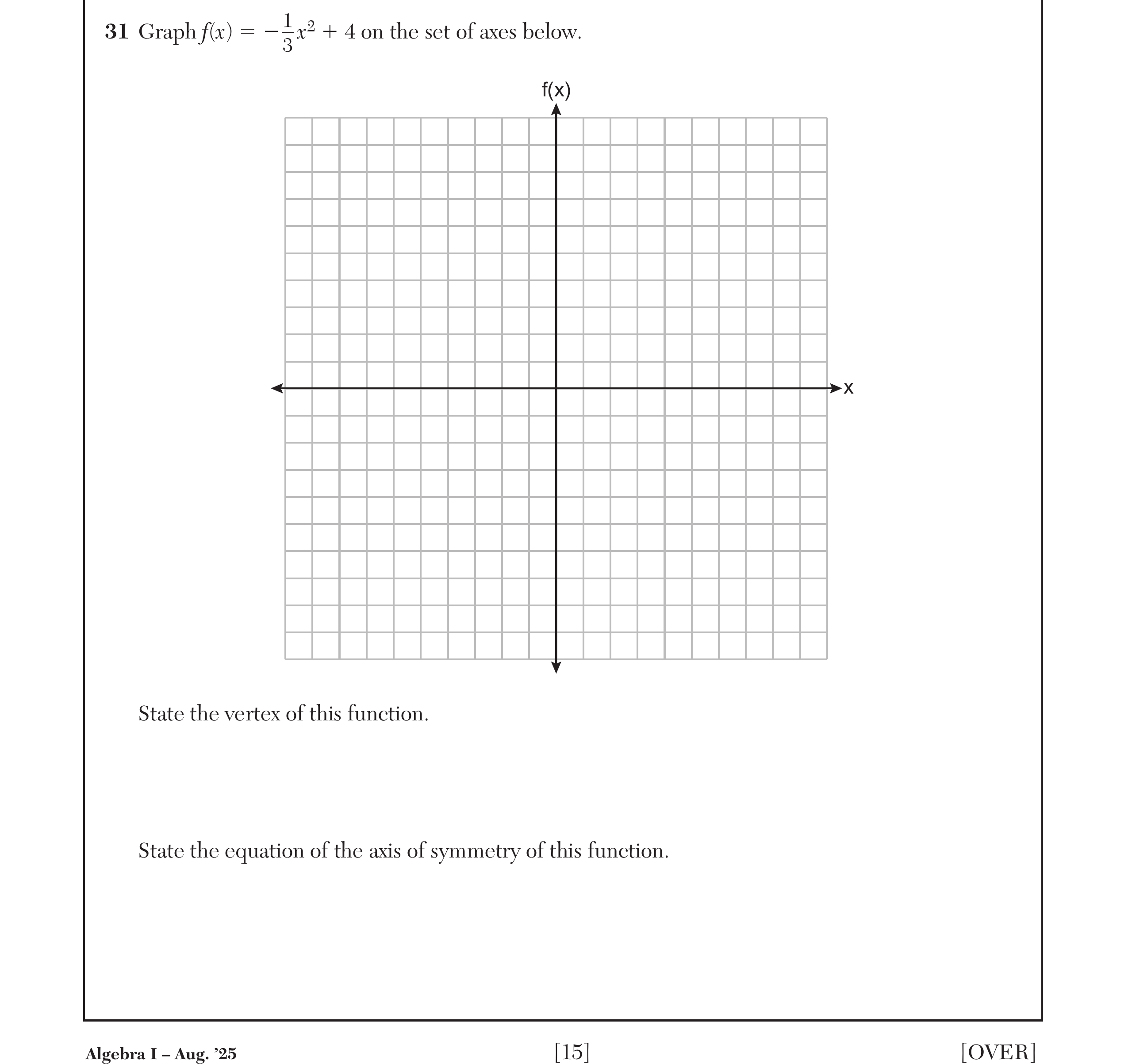
Suppose we add 6 to the squared term: y=x2+6. Adding a 6 shifts the graph upward, so the vertex is at (0,6). The vertex is the y-intercept, and the graph is centered on the y-axis.
What can the linear term bx tell us about the graph representing a quadratic function?
The linear term has a somewhat mysterious effect on the graph of a quadratic function. The graph seems to shift both horizontally and vertically. When we add bx (where b is not 0) to x2, the graph of y=x2+bx is no longer centered on the y-axis.
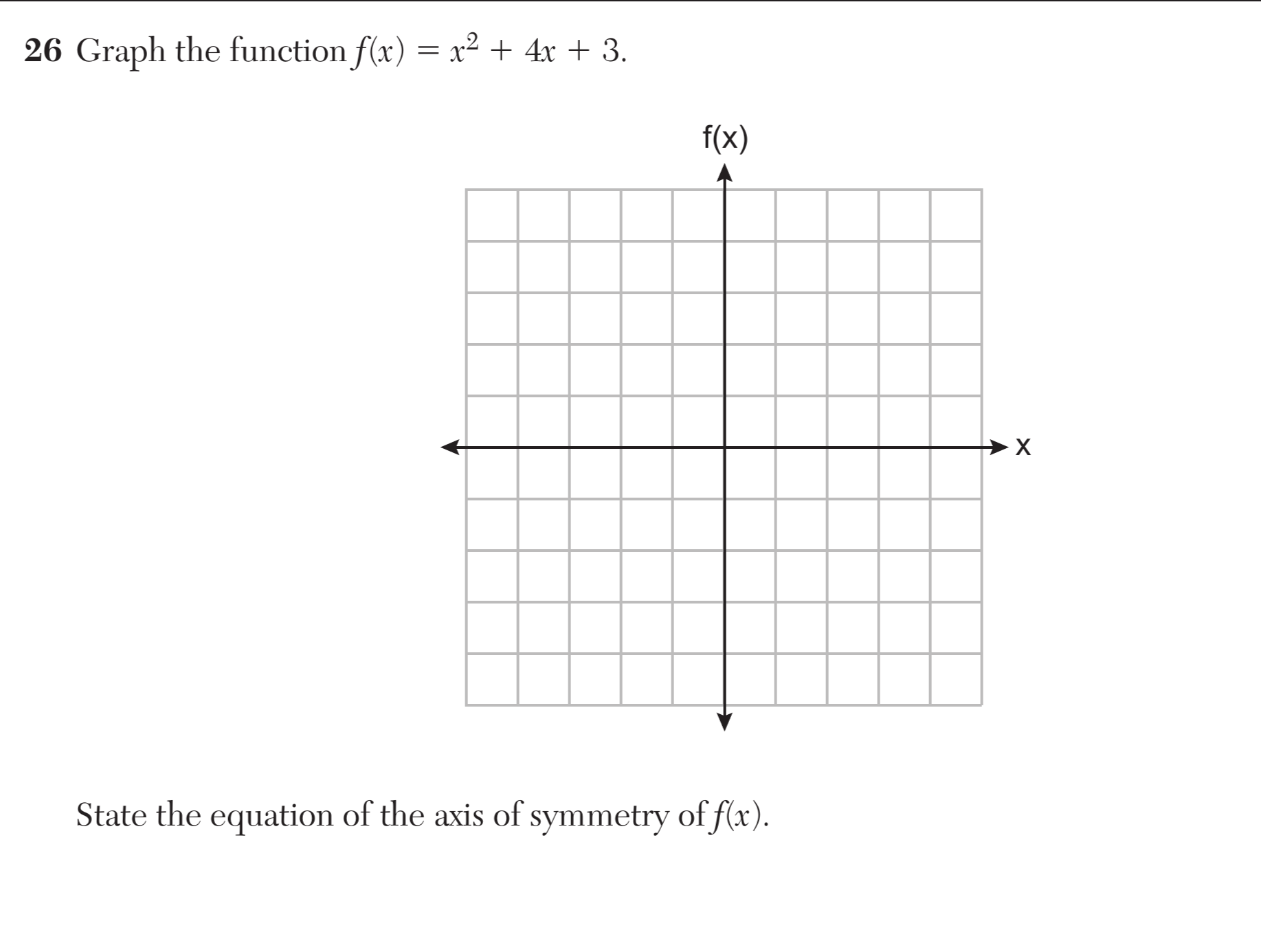
Suppose we add 6x to the squared term: y=x2+6x. Writing the x2+6x in factored form as x(x+6) gives us the zeros of the function, 0 and -6. Adding the term 6x seems to shift the graph to the left and down and the x-intercepts are now (-6,0) and (0,0). The vertex is no longer the y-intercept, and the graph is no longer centered on the y-axis.
What if we add -6x to x2? We know that x2−6x can be rewritten as x(x−6), which tells us the zeros: 0 and 6. Adding a negative linear term to a squared term seems to shift the graph to the right and down. The x-intercepts are now (0,0) and (6,0). The vertex is no longer the y-intercept, and the graph is not centered on the y-axis.
Visual / Anchor Chart

Standards
A-SSE.32 questions
Choose and produce an equivalent form of an expression to reveal and explain properties of the quantity represented by the expression.

F-BF.31 question
F-IF.7.a
Graph functions and show key features of the graph by hand and by using technology where appropriate.
F-IF.75 questions
Graph functions and show key features of the graph by hand and by using technology where appropriate.