Finding Unknown Inputs
Student Summary
The height of a softball, in feet, t seconds after someone throws it straight up, can be defined by f(t)=-16t2+32t+5. The input of function f is time, and the output is height.
We can find the output of this function at any given input. For instance:
- At the beginning of the softball's journey, when t=0, its height is given by f(0).
- Two seconds later, when t=2, its height is given by f(2).
The values of f(0) and f(2) can be found using a graph or by evaluating the expression -16t2+32t+5 at those values of t. What if we know the output of the function and want to find the inputs? For example:
-
When does the softball hit the ground?
Answering this question means finding the values of t that make f(t)=0, or solving -16t2+32t+5=0.
-
How long will it take the ball to reach 8 feet?
This means finding one or more values of t that make f(t)=8, or solving the equation -16t2+32t+5=8.
The equations -16t2+32t+5=0 and -16t2+32t+5=8 are quadratic equations. One way to solve these equations is by graphing y=f(t).
- To answer the first question, we can look for the horizontal intercepts of the graph, where the vertical coordinate is 0.
- To answer the second question, we can look for the horizontal coordinates that correspond to a vertical coordinate of 8.
We can see that there are two solutions to the equation -16t2+32t+5=8 and one solution to the equation -16t2+32t+5=0.
The softball has a height of 8 feet twice, when going up and when coming down, and these instances occur when t is about 0.1 and 1.9. It has a height of 0 once, when t is about 2.15.
Often, when we are modeling a situation mathematically, an approximate solution is good enough. Sometimes, however, we would like to know exact solutions, and it may not be possible to find them using a graph. In this unit, we will learn more about quadratic equations and how to solve for exact answers using algebraic techniques.
Visual / Anchor Chart

Standards
F-IF.4
For a function that models a relationship between two quantities: i) interpret key features of graphs and tables in terms of the quantities; and ii) sketch graphs showing key features given a verbal description of the relationship.
F-LE.6
No additional information available.
A-CED.16 questions
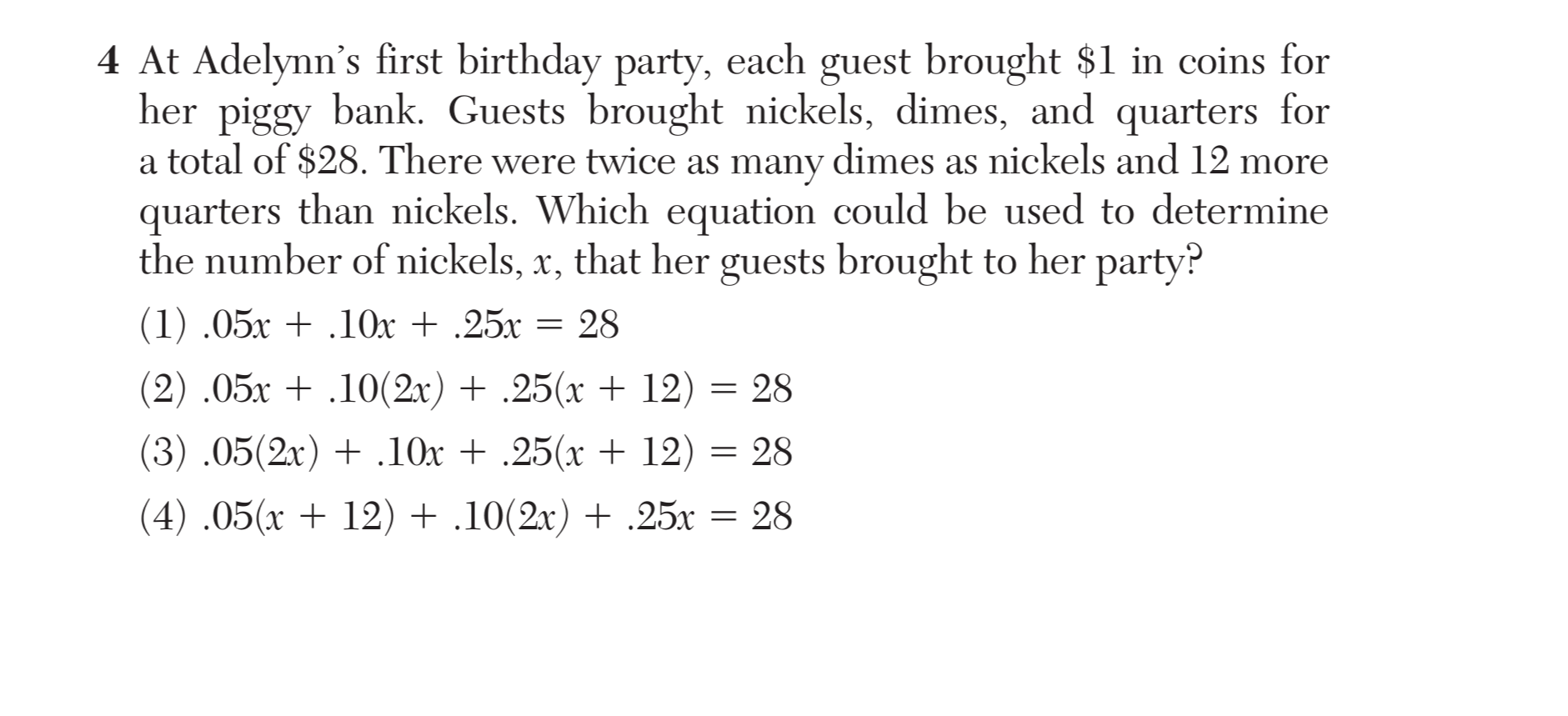
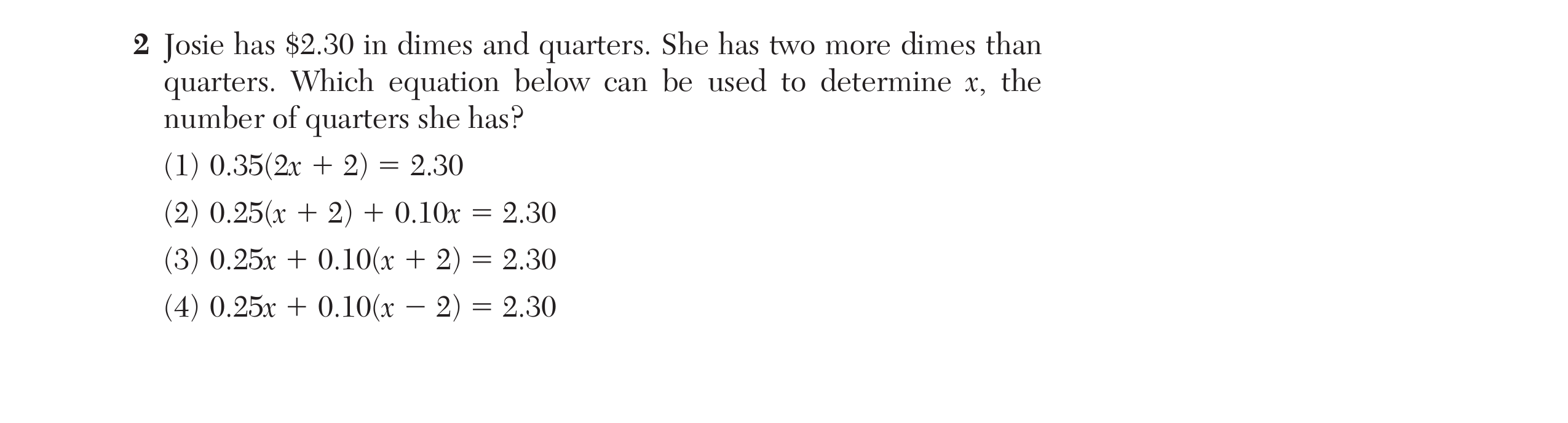
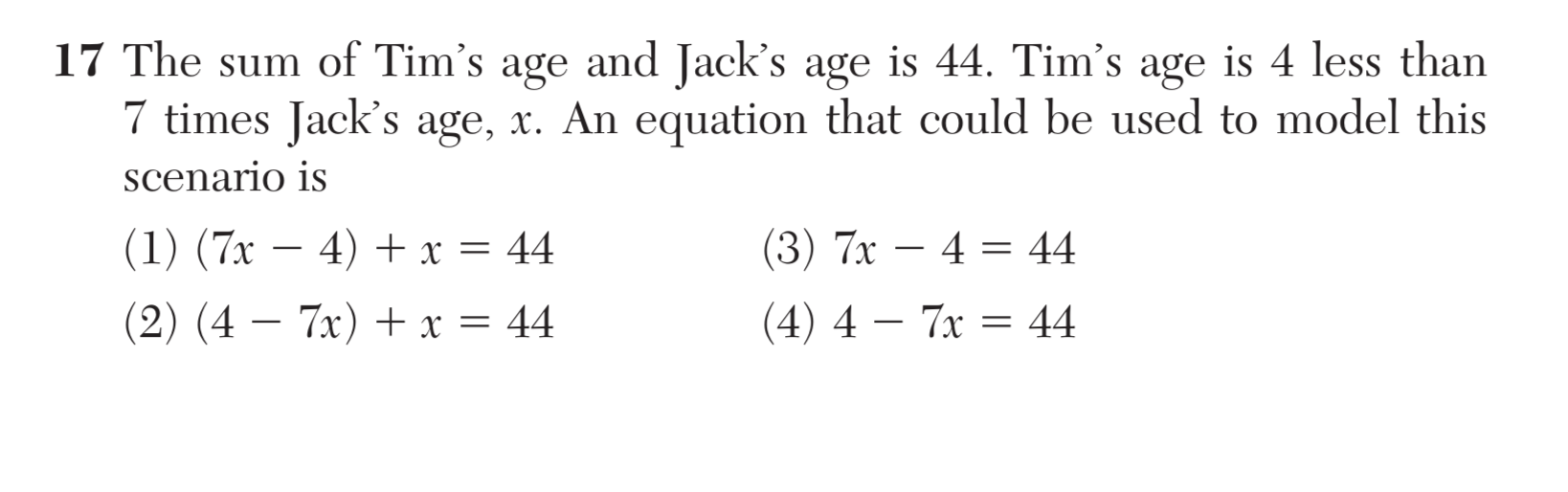
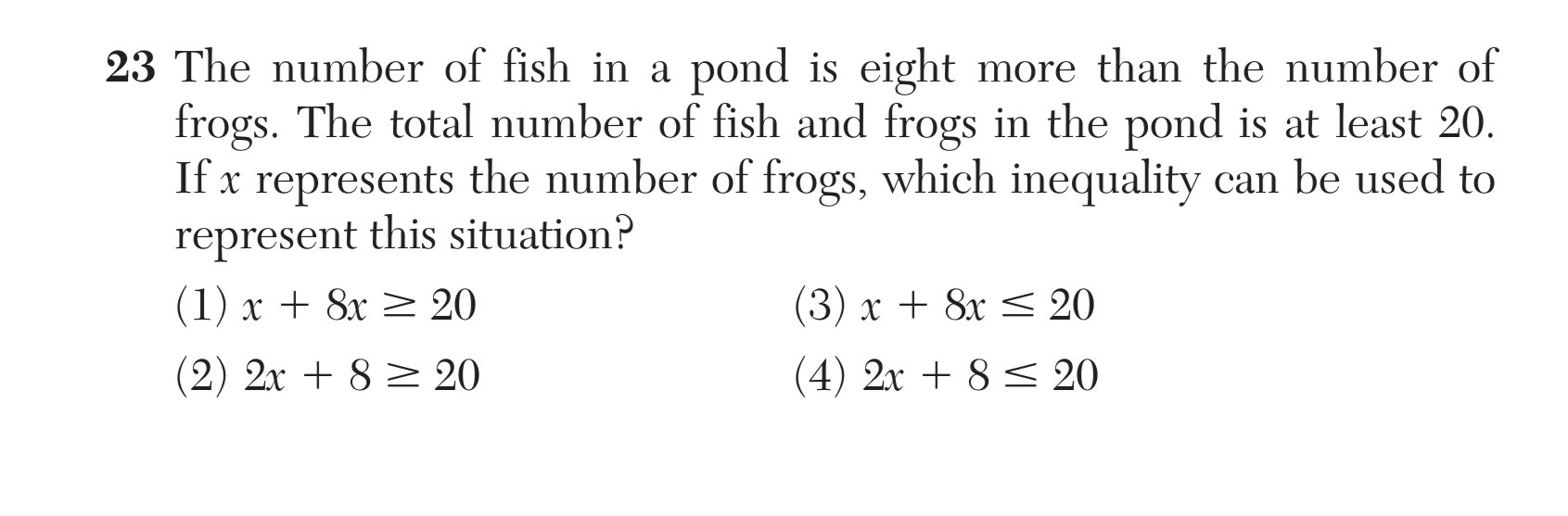
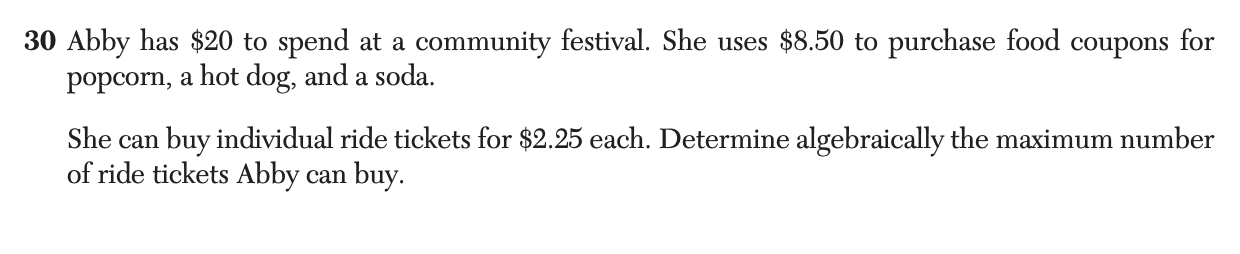
Create equations and inequalities in one variable to represent a real-world context.

A-CED.3
Represent constraints by equations or inequalities, and by systems of equations and/or inequalities, and interpret solutions as viable or non-viable options in a modeling context.