When and Why Do We Write Quadratic Equations?
Student Summary
The height of a potato that is launched from a mechanical device can be modeled by a function, g, with x representing time in seconds. Here are two expressions that are equivalent and both define function g.
-16x2+80x+96
-16(x−6)(x+1)
Notice that one expression is in standard form and the other is in factored form.
Suppose we wish to know, without graphing the function, the time when the potato will hit the ground. We know that the value of the function at that time is 0, so we can write:
-16x2+80x+96=0
-16(x−6)(x+1)=0
Let's try solving -16x2+80x+96=0, using some familiar moves. For example:
- Subtract 96 from each side:
-16x2+80x=-96
- Apply the distributive property to rewrite the expression on the left:
-16(x2−5x)=-96
- Divide both sides by -16:
x2−5x=6
- Apply the distributive property to rewrite the expression on the left:
x(x−5)=6
These steps don’t seem to get us any closer to a solution. We need some new moves!
What if we use the other equation? Can we find the solutions to -16(x−6)(x+1)=0?
Earlier, we learned that the zeros of a quadratic function can be identified when the expression defining the function is in factored form. The solutions to -16(x−6)(x+1)=0 are the zeros to function g, so this form may be more helpful! We can reason that:
- If x is 6, then the value of x−6 is 0, so the entire expression has a value of 0.
- If x is -1, then the value of x+1 is 0, so the entire expression also has a value of 0.
This tells us that 6 and -1 are solutions to the equation, and that the potato hits the ground after 6 seconds. (A negative value of time is not meaningful, so we can disregard the -1.)
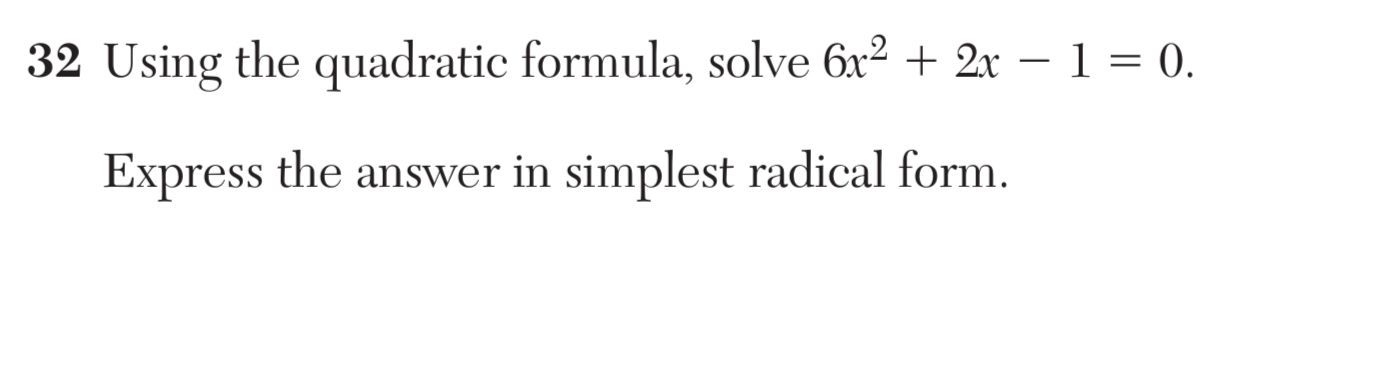
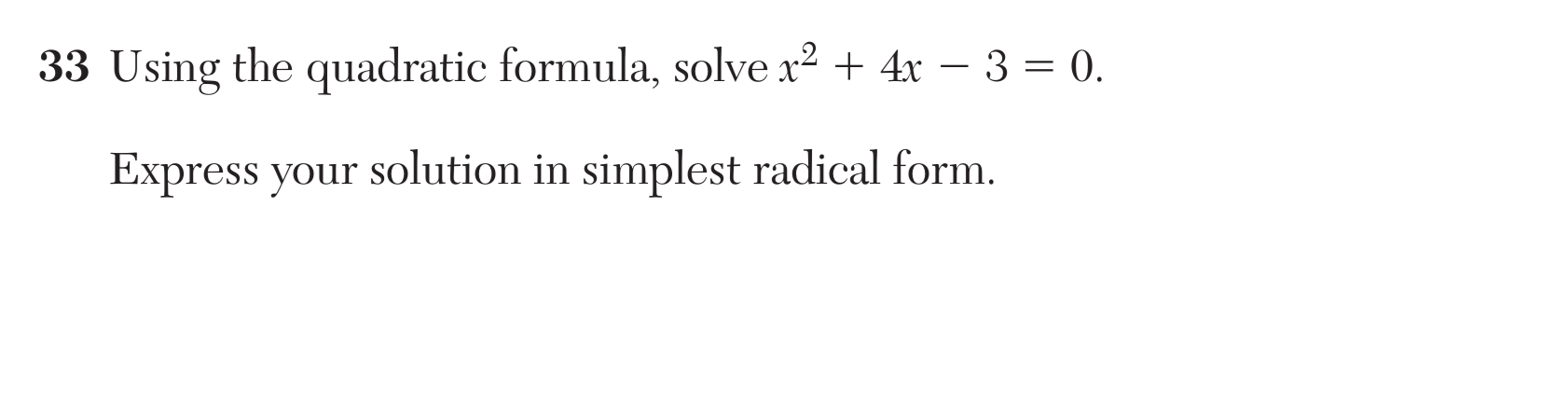
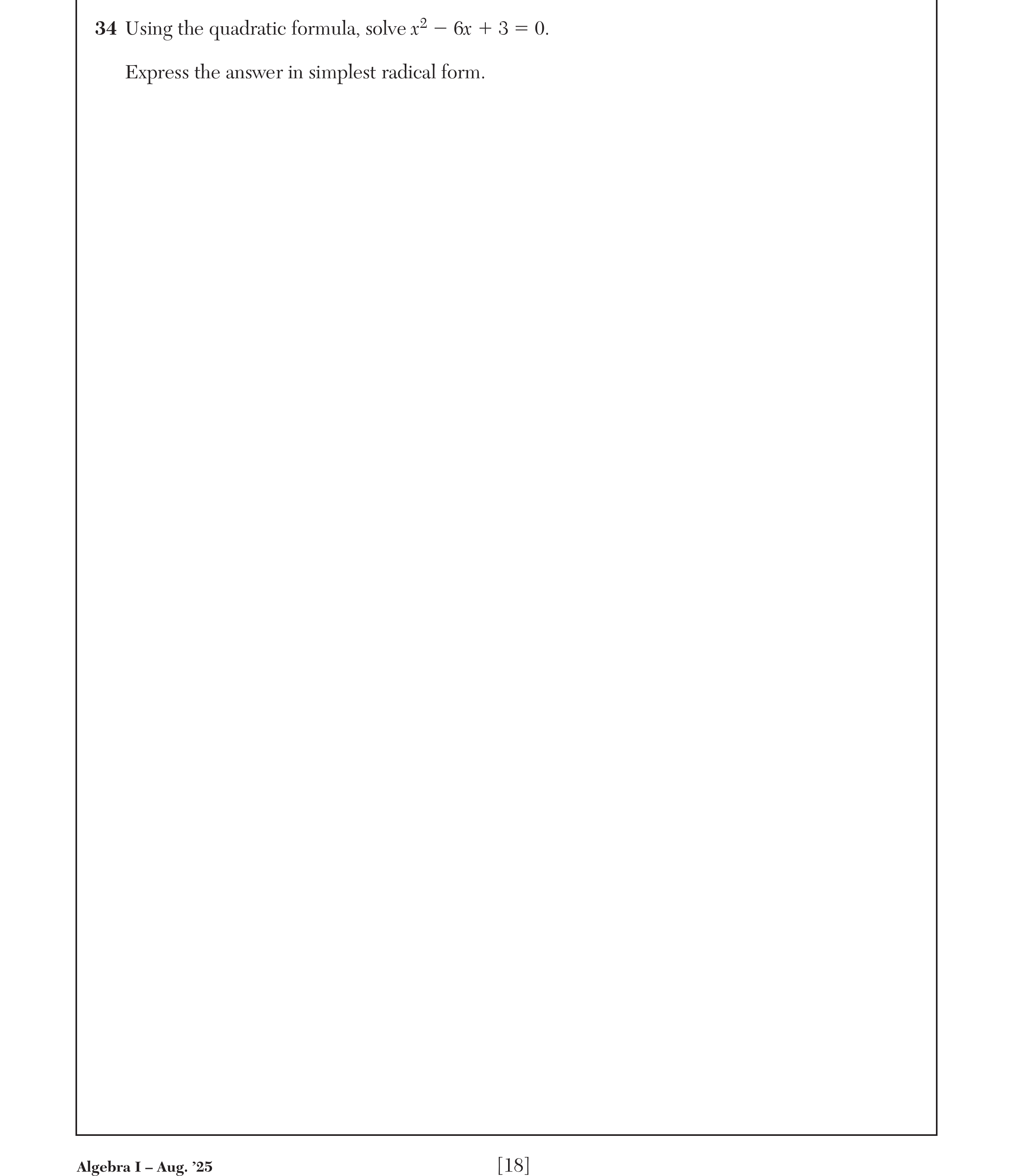
Both equations we see here are quadratic equations. In general, a quadratic equation is an equation that can be expressed as ax2+bx+c=0, where a, b, and c are constants and a=0.
In upcoming lessons, we will learn how to rewrite quadratic equations into forms that make the solutions easy to see.
Visual / Anchor Chart

Standards
A-REI.3
Solve linear equations and inequalities in one variable, including equations with coefficients represented by letters.
F-IF.7.a
Graph functions and show key features of the graph by hand and by using technology where appropriate.
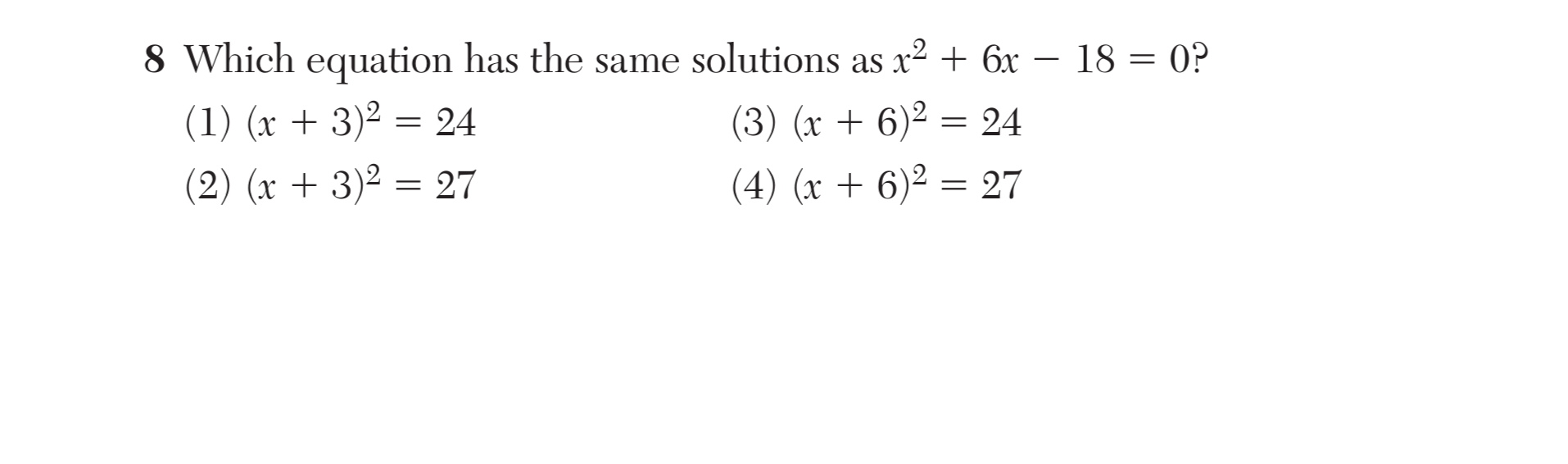
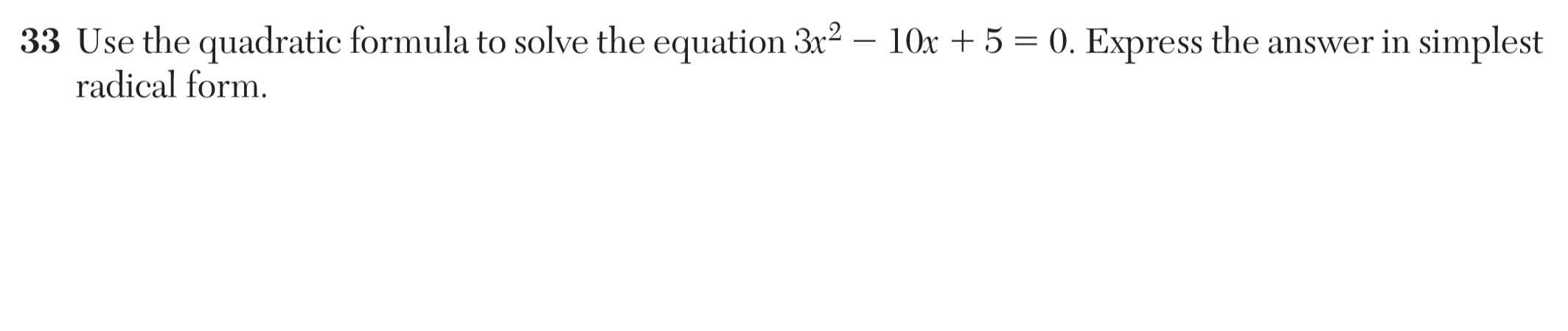
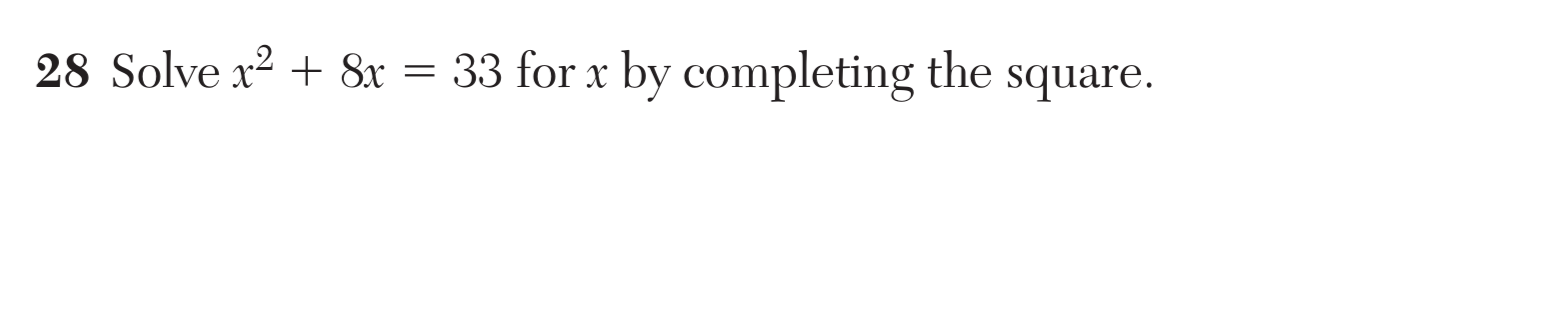
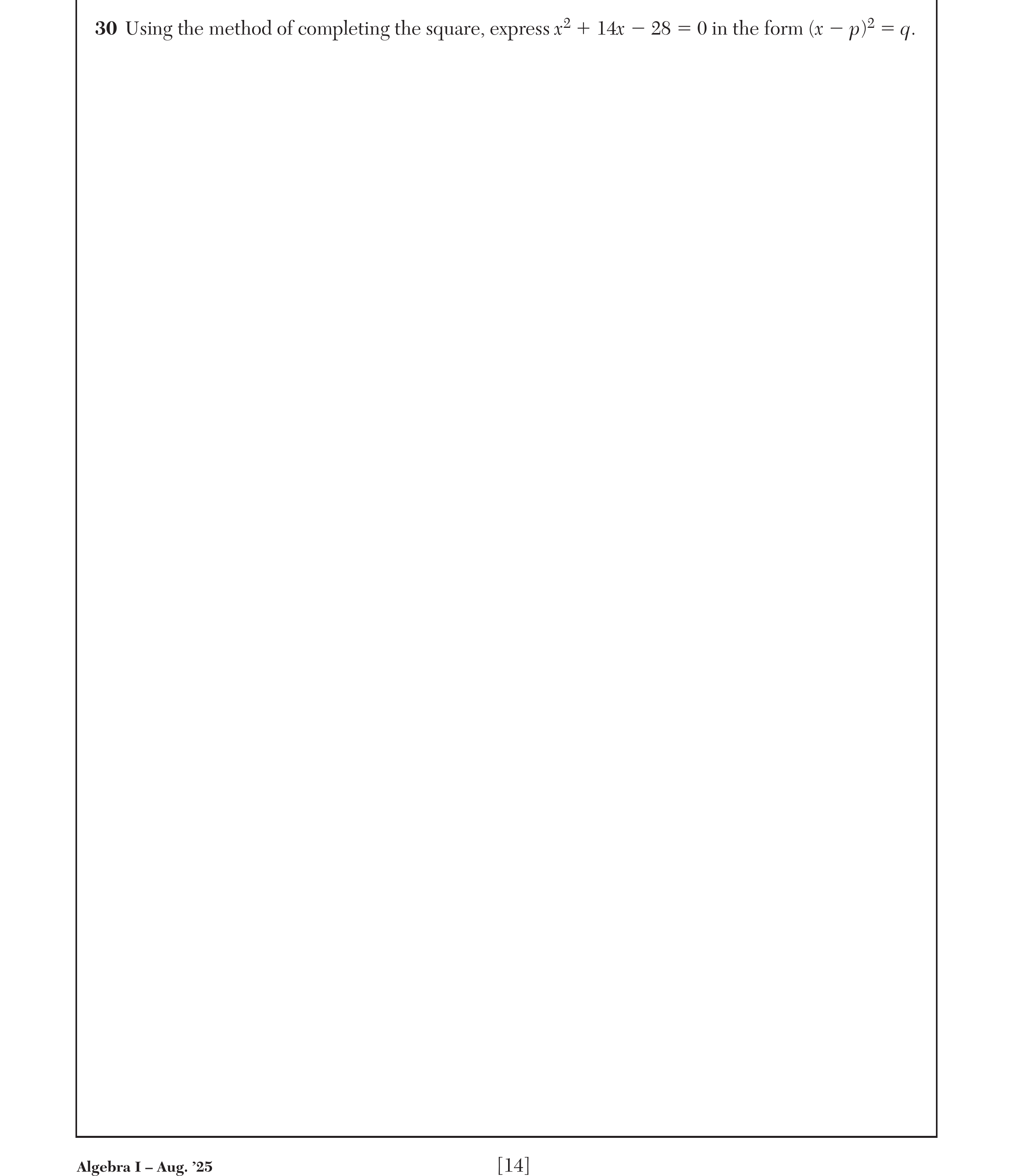
A-REI.412 questions
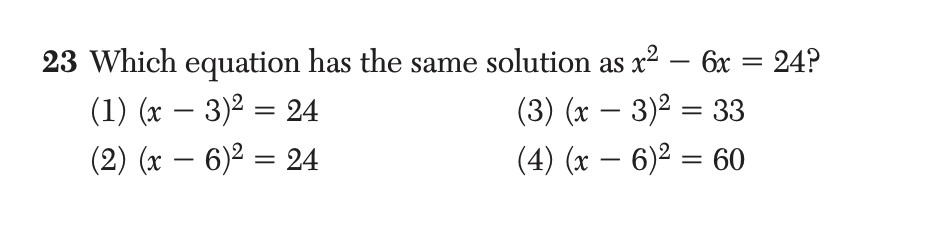
Solve quadratic equations in one variable.




F-LE.6
No additional information available.
A-REI.4.b
Solve quadratic equations in one variable.