Solving Quadratic Equations with the Zero Product Property
Student Summary
The zero product property says that if the product of two numbers is 0, then one of the numbers must be 0. In other words, if a⋅b=0, then either a=0 or b=0. This property is handy when an equation we want to solve states that the product of two factors is 0.
Suppose we want to solve m(m+9)=0. This equation says that the product of m and (m+9) is 0. For this to be true, either m=0 or m+9=0, so both 0 and -9 are solutions.
Here is another equation: (u−2.345)(14u+2)=0. The equation says the product of (u−2.345) and (14u+2) is 0, so we can use the zero product property to help us find the values of u. For the equation to be true, one of the factors must be 0.
- For u−2.345=0 to be true, u would have to be 2.345.
- For 14u+2=0 or (14u=-2) to be true, u would have to be -142, or -71.
The solutions are 2.345 and -71.
In general, when a quadratic expression in factored form is on one side of an equation and 0 is on the other side, we can use the zero product property to find its solutions.
This property is unique to 0. Given an equation like a⋅b=6, the factors could be 2 and 3, 1 and 6, -12 and -21, π and π6, or any other of the infinite number of combinations. This type of equation does not give insight into the value of a or b.
Visual / Anchor Chart

Standards
A-REI.1
No additional information available.
A-REI.3
Solve linear equations and inequalities in one variable, including equations with coefficients represented by letters.
A-REI.412 questions
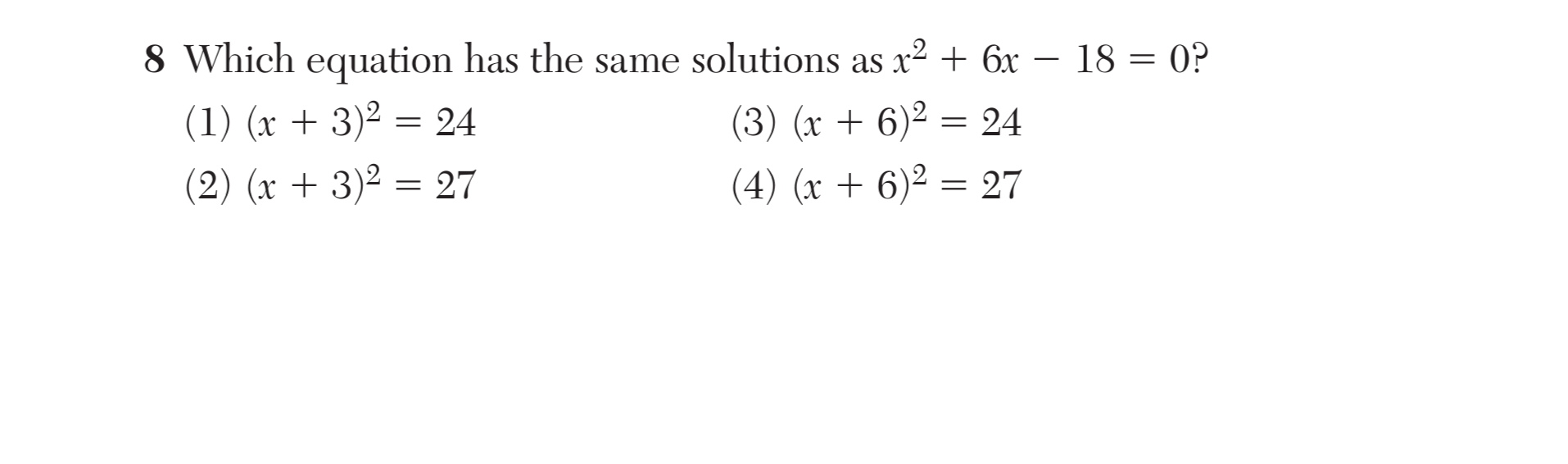
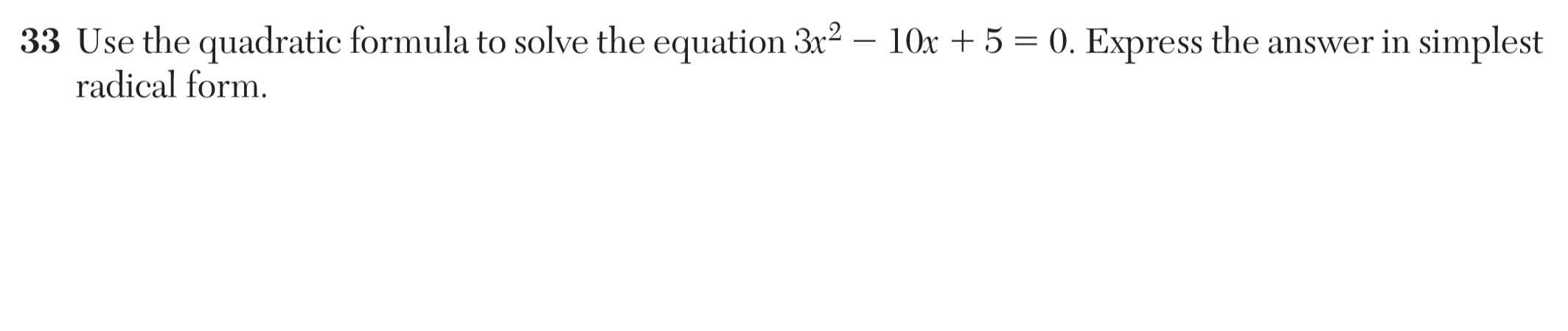
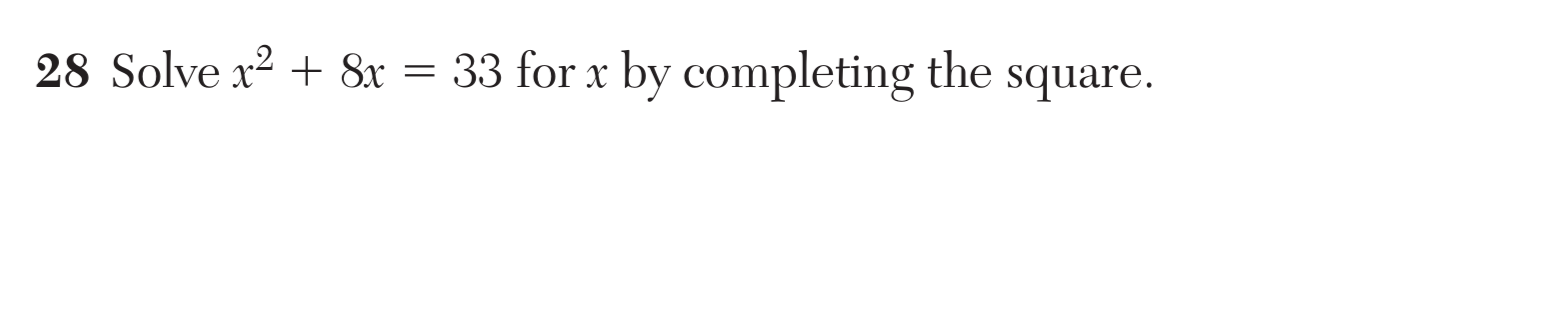
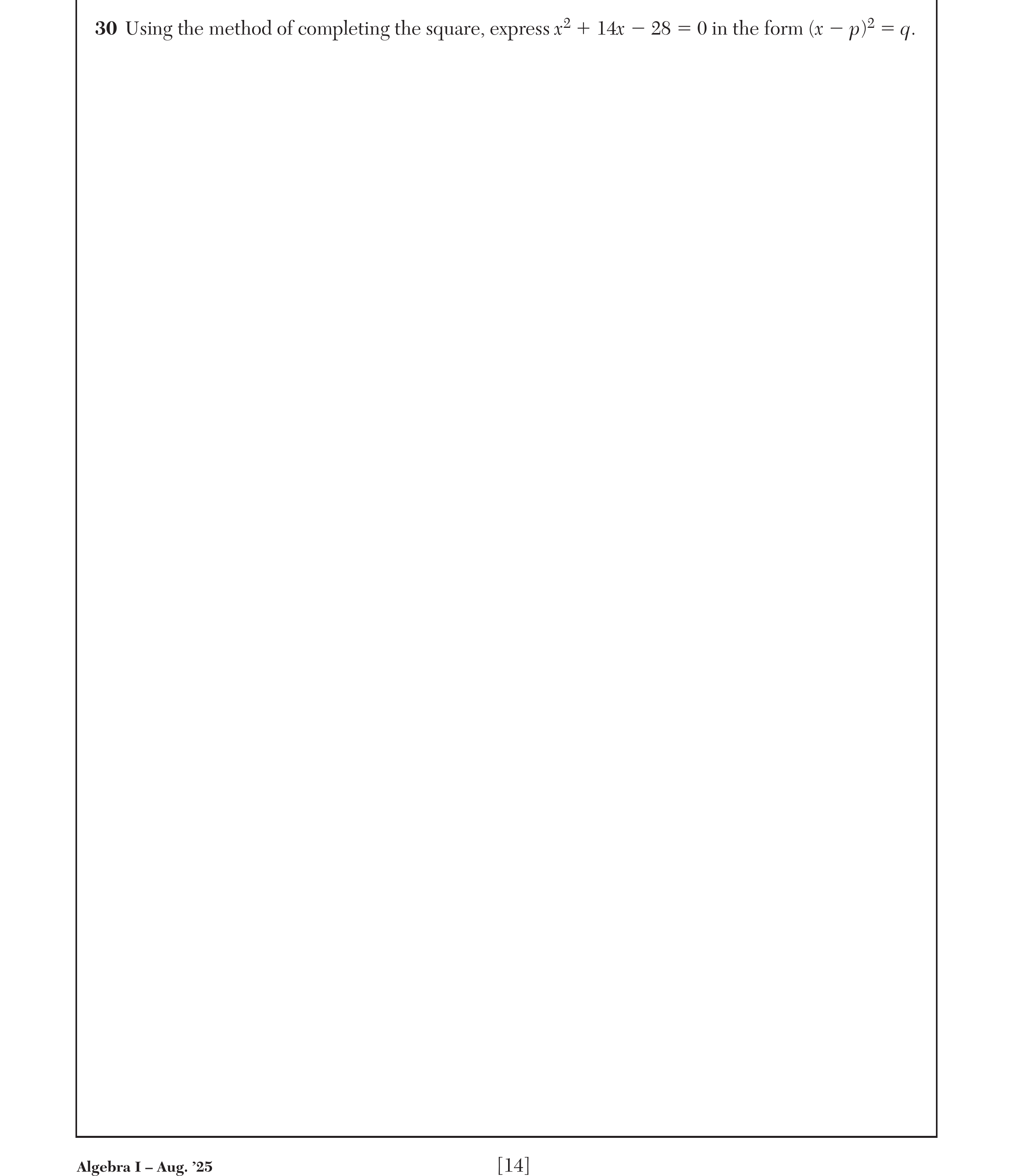
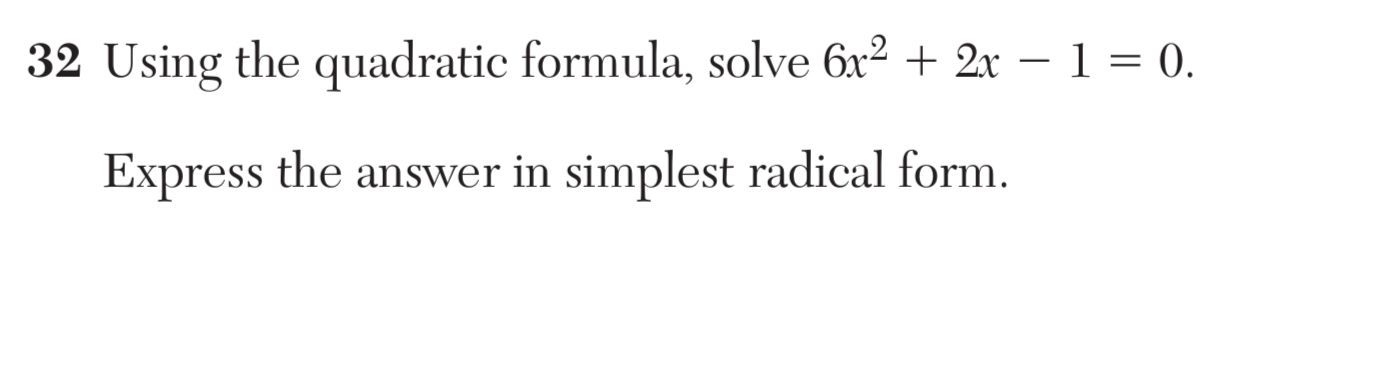
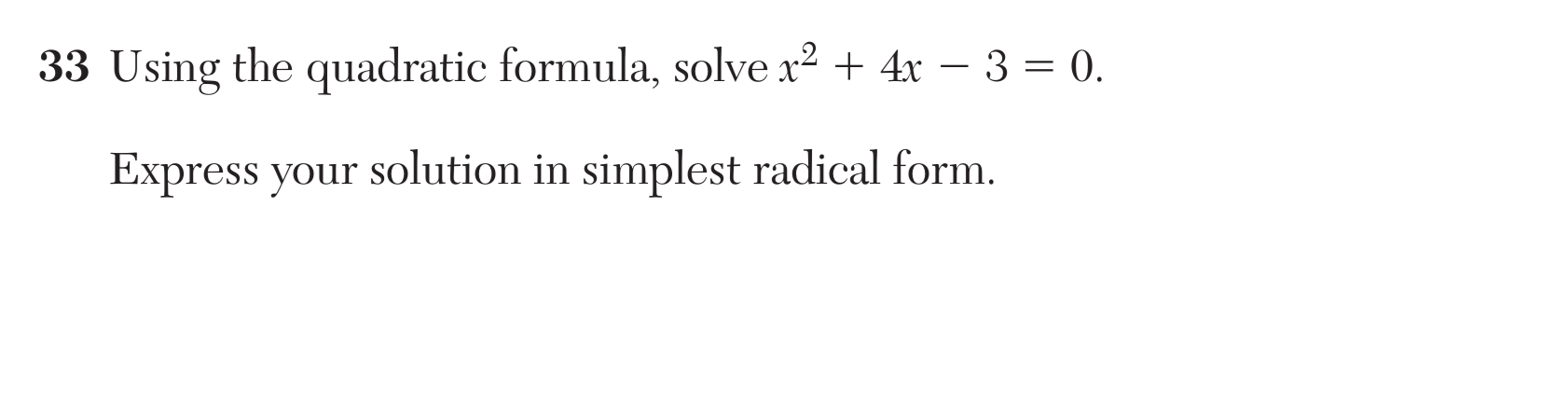
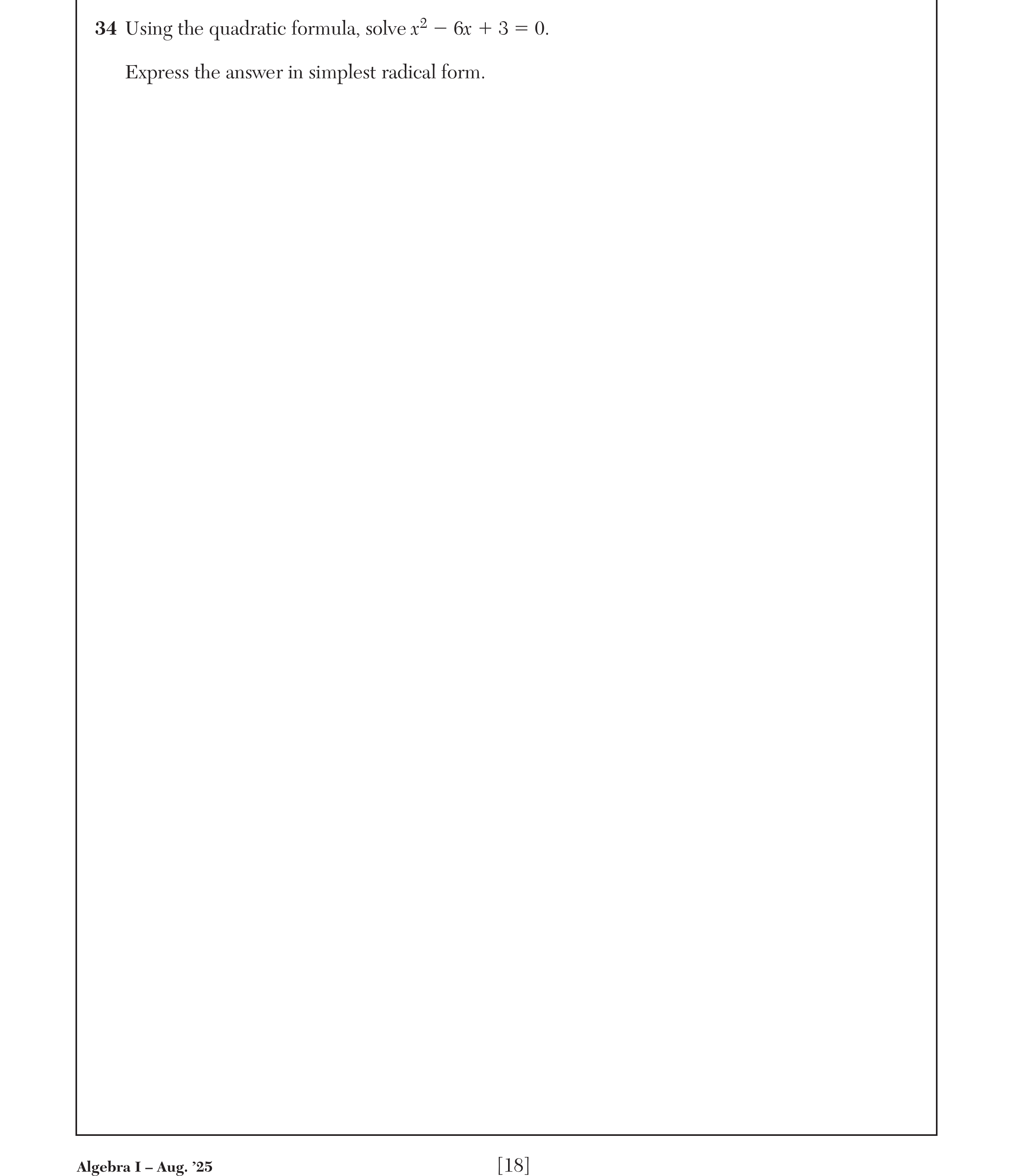
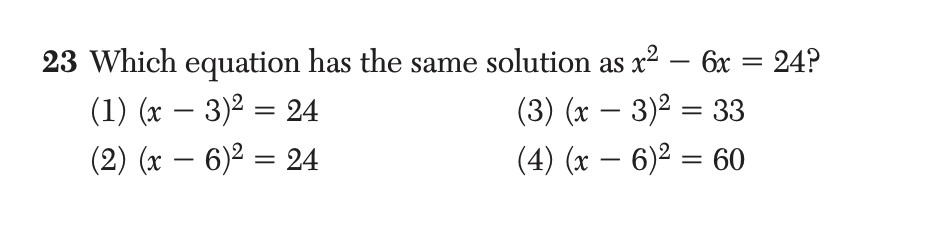
Solve quadratic equations in one variable.




F-LE.6
No additional information available.
A-CED.1
Create equations and inequalities in one variable to represent a real-world context.
A-SSE.3
Choose and produce an equivalent form of an expression to reveal and explain properties of the quantity represented by the expression.