Applying the Quadratic Formula (Part 1)
Student Summary
Quadratic equations that represent situations cannot always be neatly put into factored form or easily solved by finding square roots. Completing the square is a workable strategy, but for some equations, it may involve many cumbersome steps. Graphing is also a handy way to solve the equations, but it doesn’t always give us precise solutions.
With the quadratic formula, we can solve these equations more readily and precisely.
Here’s an example: Function h models the height of an object, in meters, t seconds after it is launched into the air. It is is defined by h(t)=-5t2+25t.
To know how much time it would take the object to reach 15 meters, we could solve the equation 15=-5t2+25t. How should we do it?
- Rewriting it in standard form gives -5t2+25t−15=0. The expression on the left side of the equation cannot be written in factored form, however.
- Completing the square isn't convenient because the coefficient of the squared term is not a perfect square and the coefficient the linear term is an odd number.
- Let’s use the quadratic formula, using a=-5,b=25,and c=-15!
ttt=2a-b±b2−4ac=2(-5)-25±252−4(-5)(-15)=-10-25±325
The expression -10-25±325 represents the two exact solutions of the equation.
We can also get approximate solutions by using a calculator, or by reasoning that 325≈18.
The solutions tell us that there are two times after the launch when the object is at a height of 15 meters: at about 0.7 second (as the object is going up) and 4.3 seconds (as it comes back down).
Visual / Anchor Chart

Standards
A-REI.A
No additional information available.
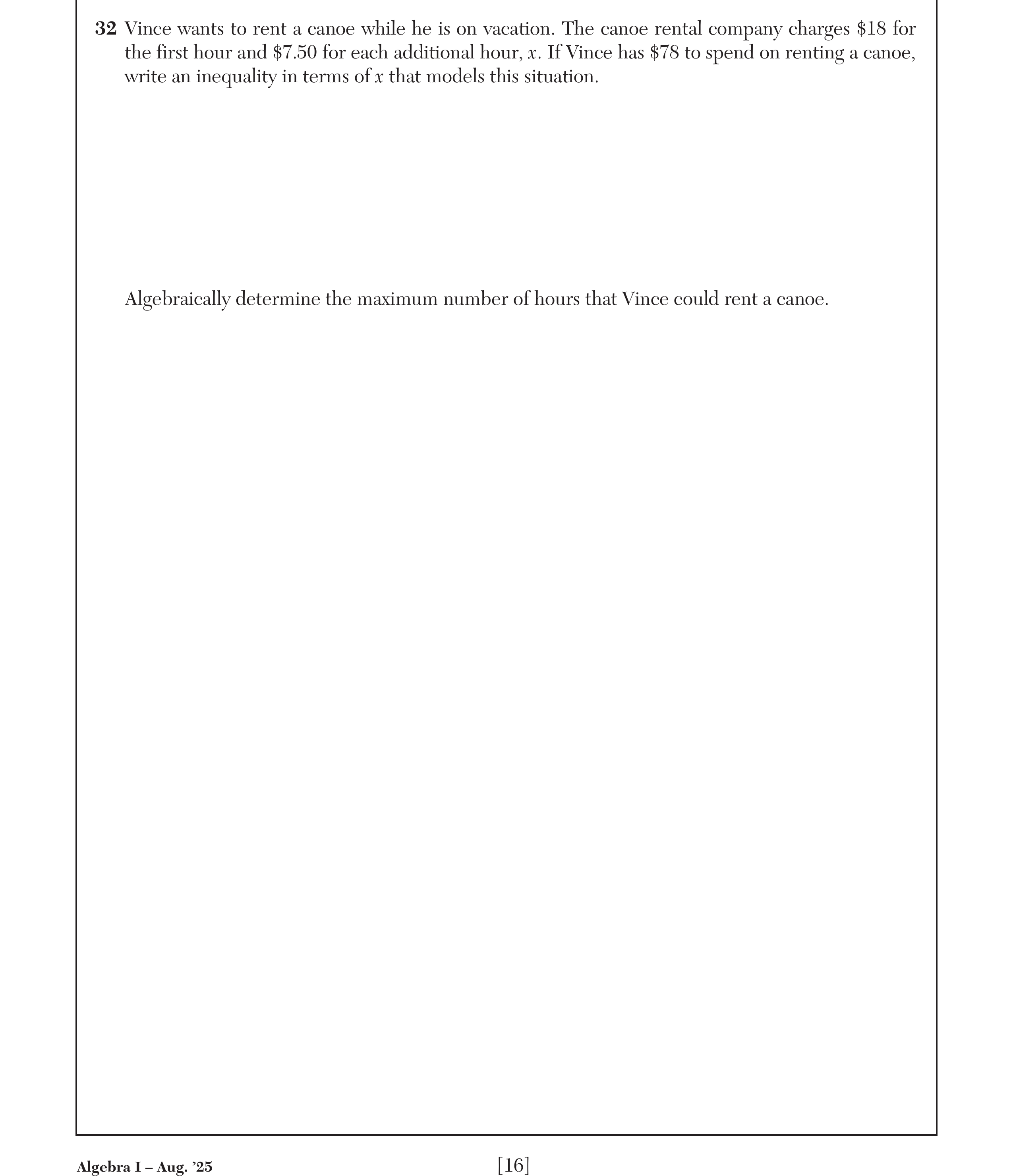
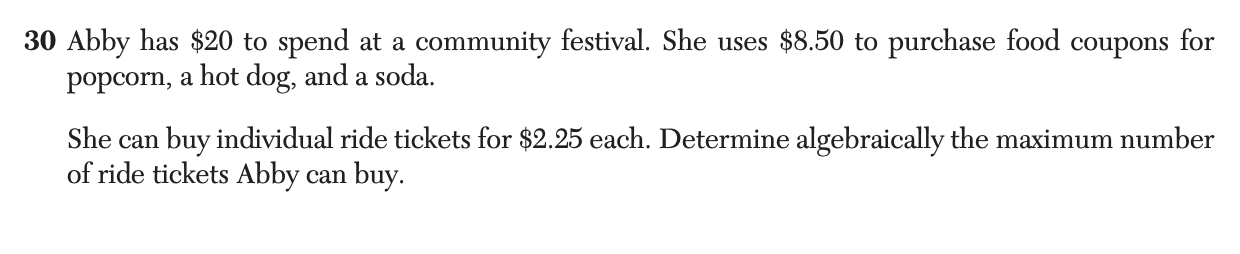
A-CED.16 questions
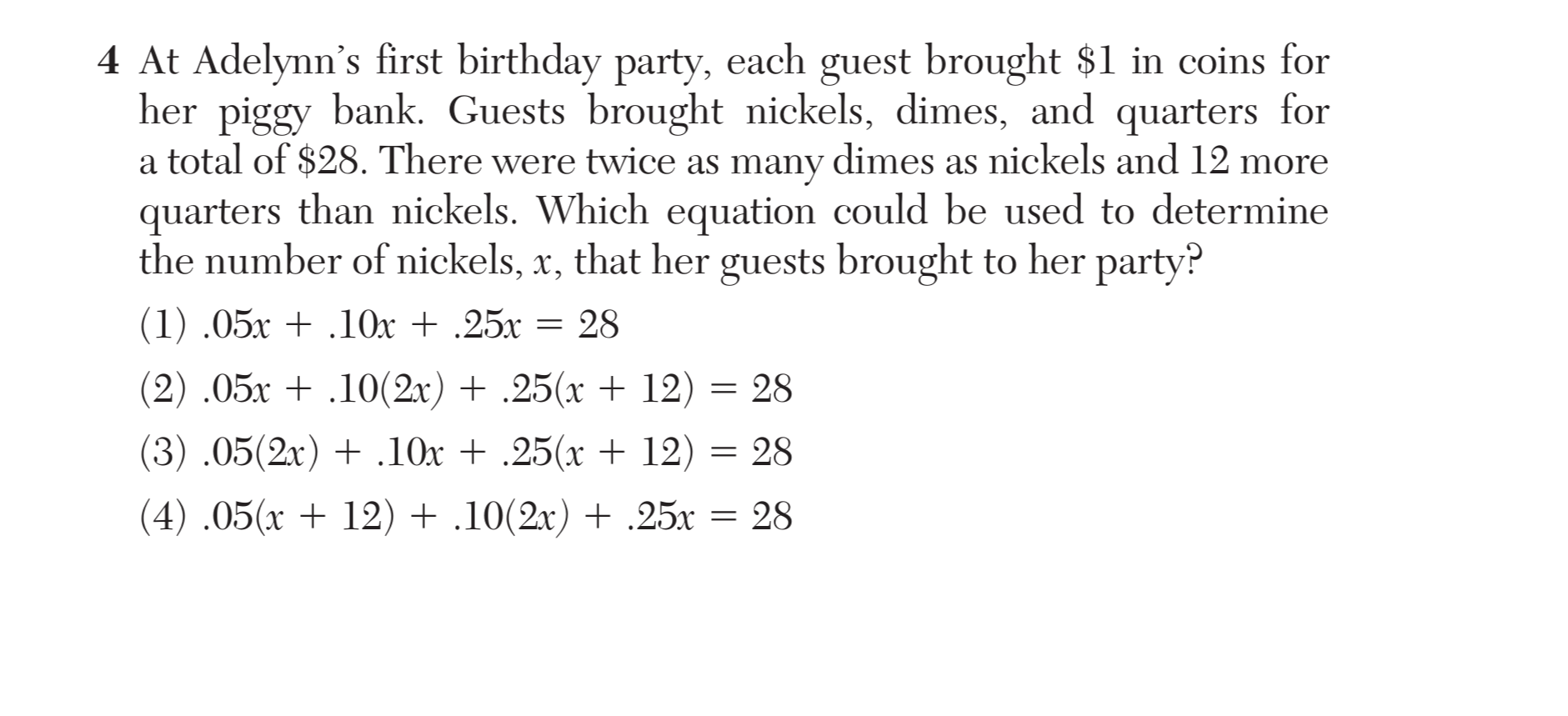
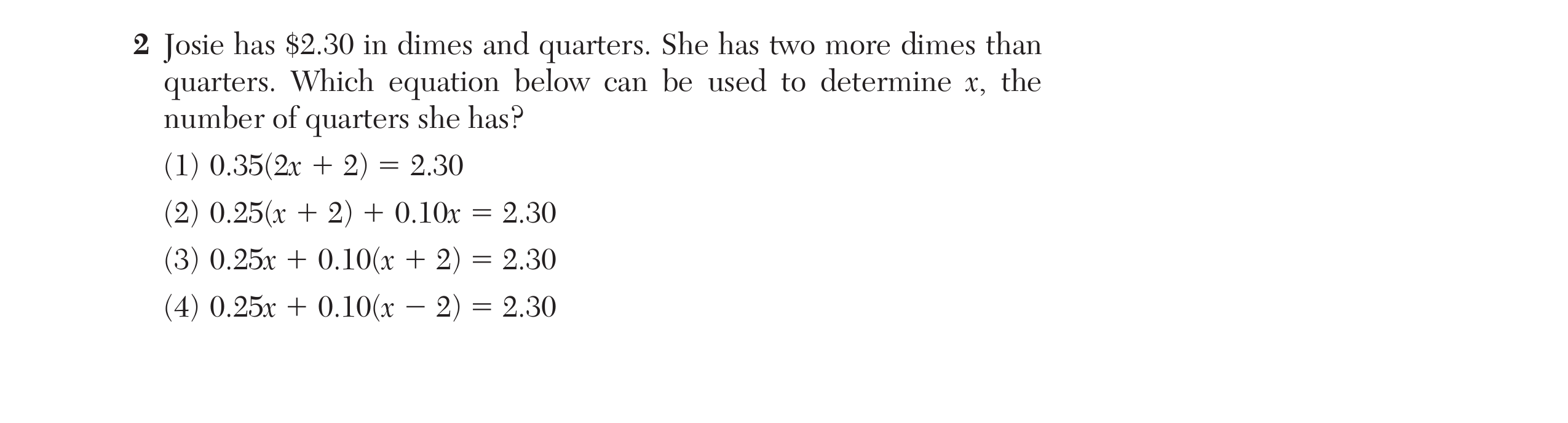
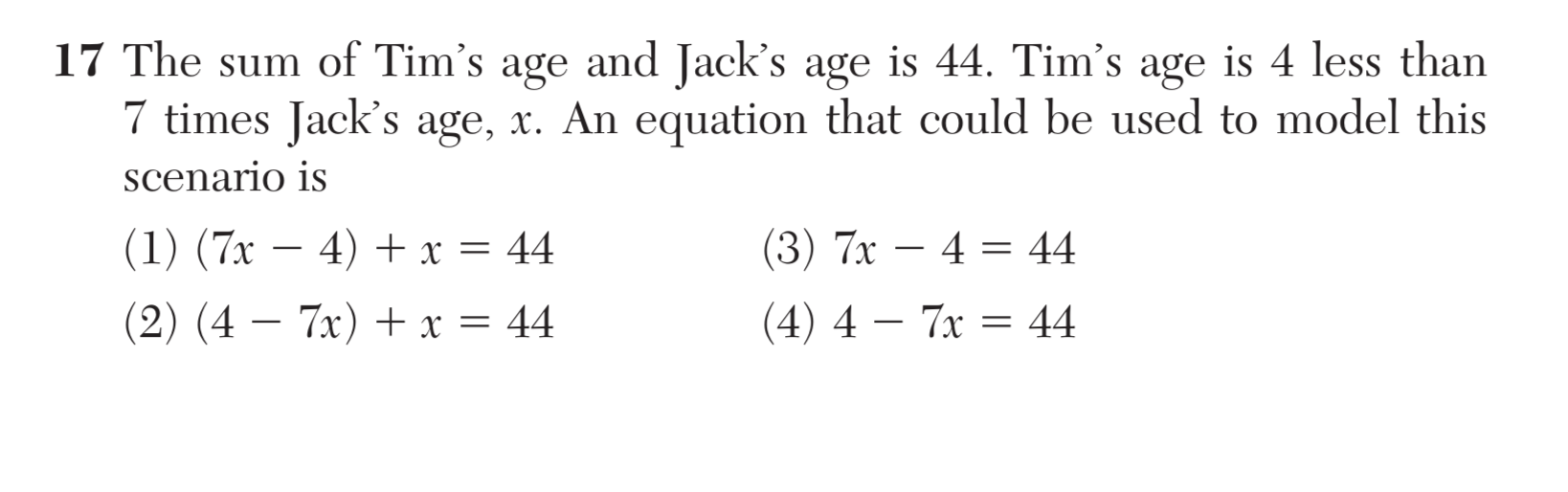
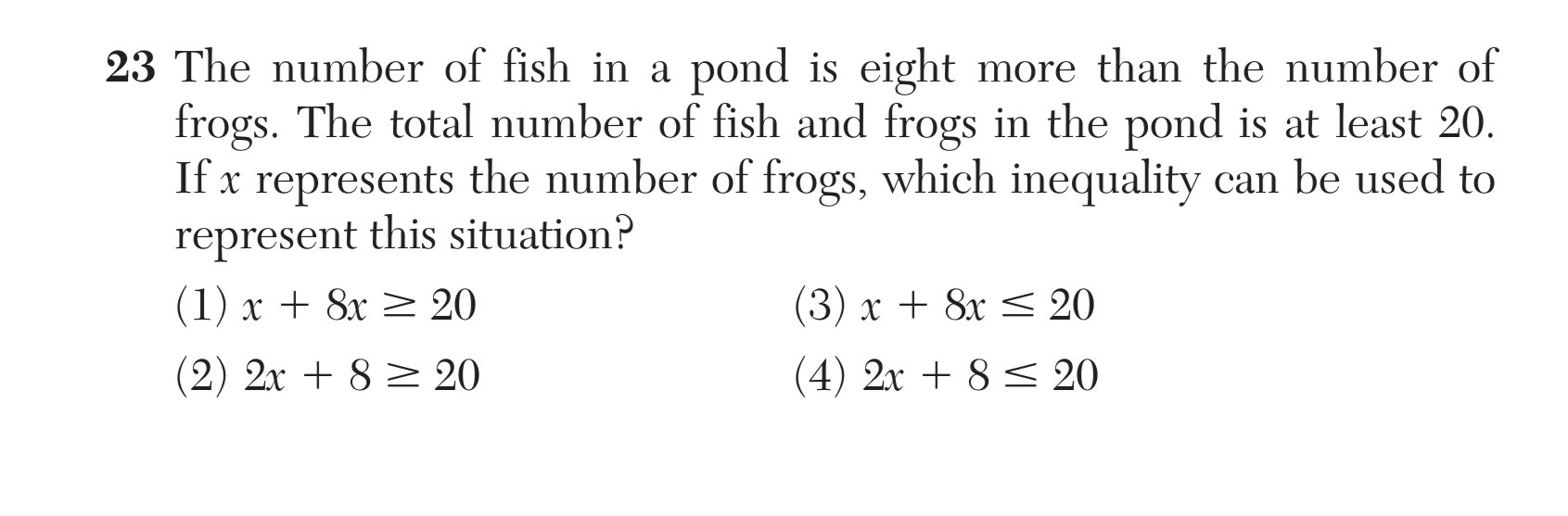
Create equations and inequalities in one variable to represent a real-world context.
A-REI.4.b
Solve quadratic equations in one variable.
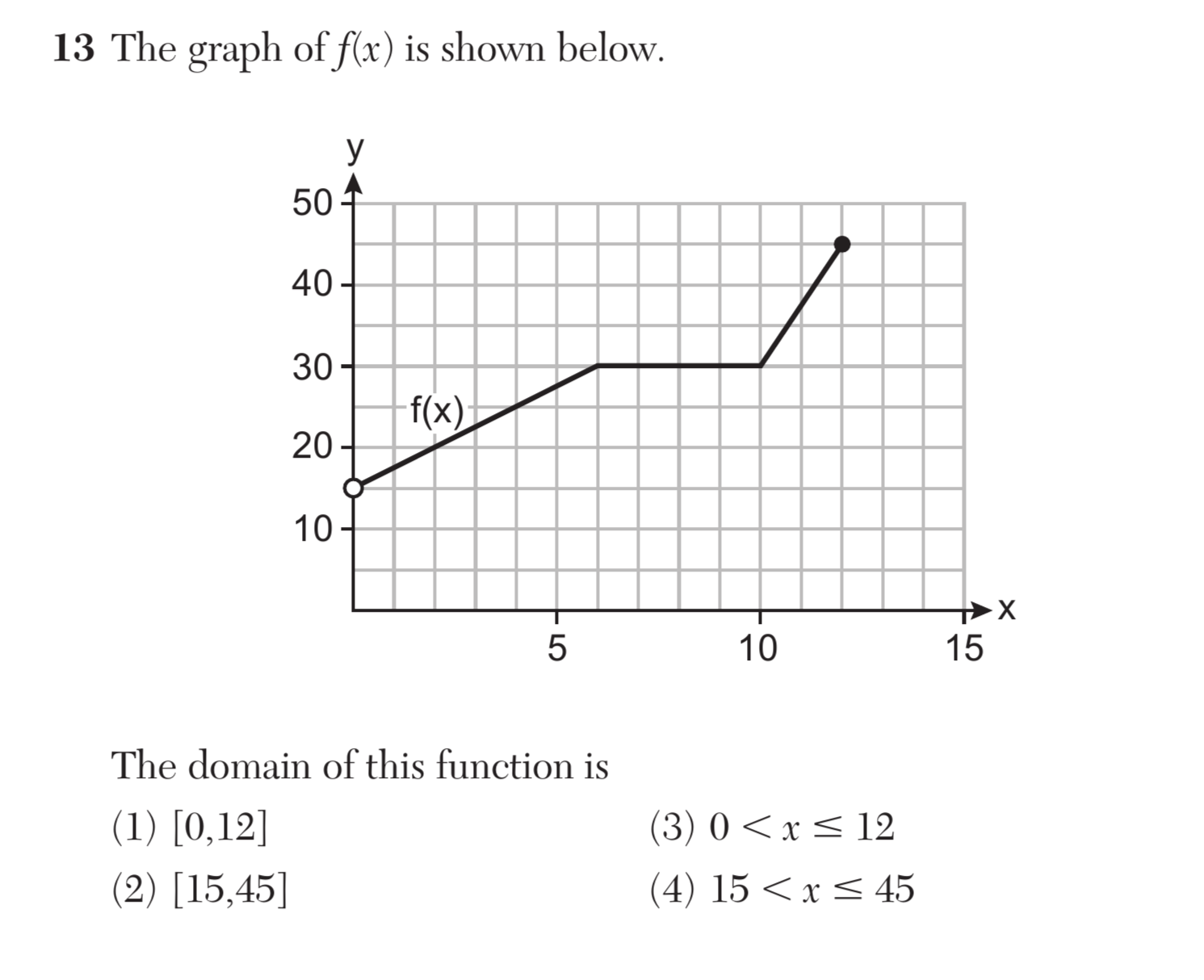
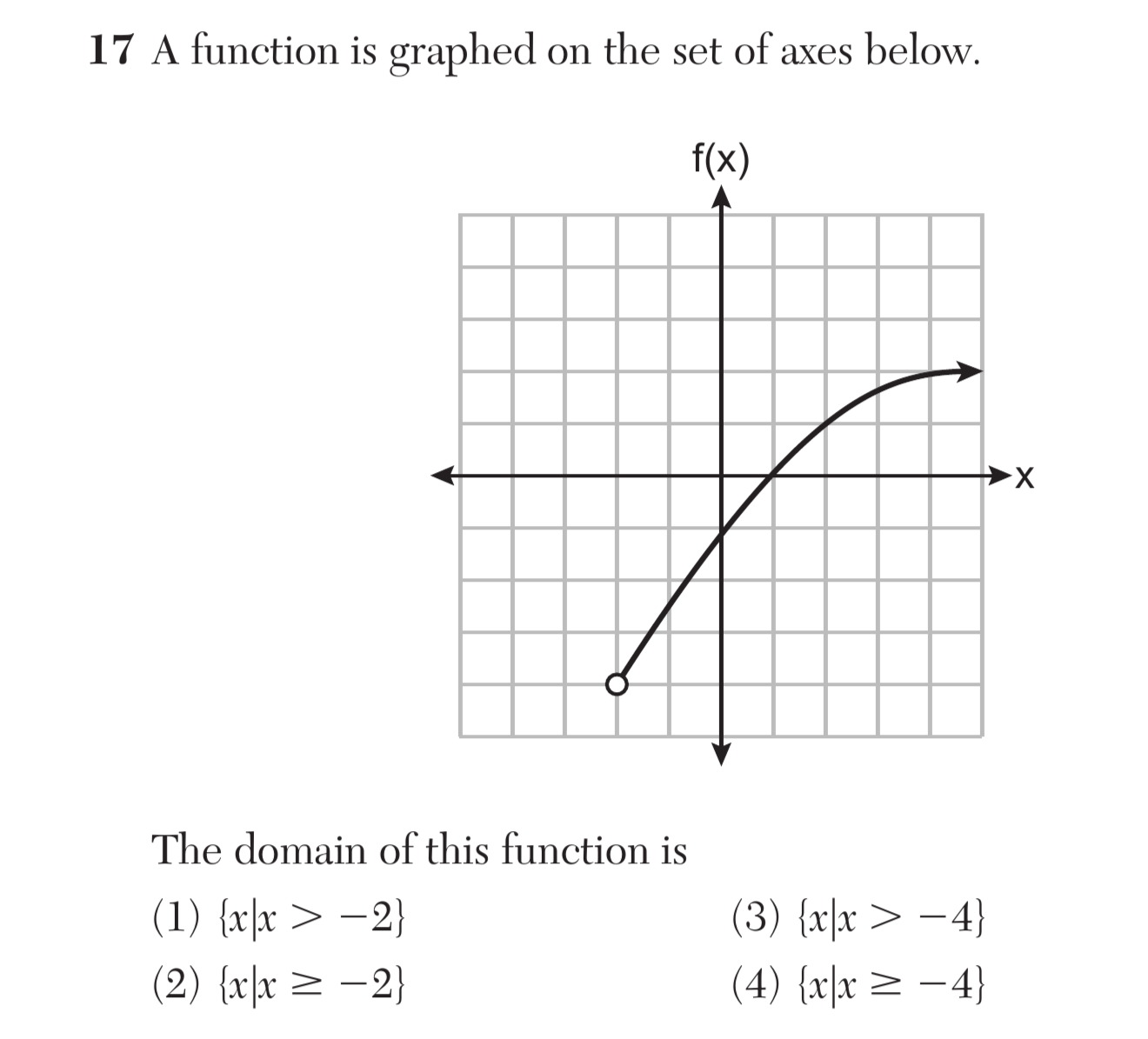
F-IF.52 questions
Determine the domain of a function from its graph and, where applicable, identify the appropriate domain for a function in context.
F-LE.6
No additional information available.
A-REI.4
Solve quadratic equations in one variable.