Rewriting Quadratic Expressions in Vertex Form
Student Summary
Remember that a quadratic function can be defined by equivalent expressions in different forms, which enable us to see different features of its graph. For example, these expressions define the same function:
(x−3)(x−7)x2−10x+21(x−5)2−4factored formstandard formvertex form
- From factored form, we can tell that the x-intercepts are (3,0) and (7,0).
- From standard form, we can tell that the y-intercept is (0,21).
- From vertex form, we can tell that the vertex is (5,-4).
Recall that a function expressed in vertex form is written as a(x−h)2+k. The values of h and k reveal the vertex of the graph: (h,k) are the coordinates of the vertex. In this example, a is 1, h is 5, and k is -4.
-
If we have an expression in vertex form, we can rewrite it in standard form by using the distributive property and combining like terms.
Let’s say we want to rewrite (x−1)2−4 in standard form.
(x−1)2−4(x−1)(x−1)−4x2−2x+1−4x2−2x−3
-
If we have an expression in standard form, we can rewrite it in vertex form by completing the square.
Let’s rewrite x2+10x+24 in vertex form.
A perfect square would be x2+10x+25, so we need to add 1. Adding 1, however, would change the expression. To keep the new expression equivalent to the original one, we will need to both add 1 and subtract 1.
x2+10x+24x2+10x+24+1−1x2+10x+25−1(x+5)2−1
-
Let’s rewrite another expression in vertex form: -2x2+12x−30.
To make it easier to complete the square, we can use the distributive property to rewrite the expression with -2 as a factor, which gives -2(x2−6x+15).
For the expression in the parentheses to be a perfect square, we need x2−6x+9. We have 15 in the expression, so we can subtract 6 from it to get 9, and then add 6 again to keep the value of the expression unchanged. Then, we can rewrite x2−6x+9 in factored form.
-2x2+12x−30-2(x2−6x+15)-2(x2−6x+15−6+6)-2(x2−6x+9+6)-2((x−3)2+6)
This expression is not yet in vertex form, however. To finish up, we need to apply the distributive property again so that the expression is of the form a(x−h)2+k:
-2((x−3)2+6)-2(x−3)2−12
When written in this form, we can see that the vertex of the graph representing -2(x−3)2−12 is (3,-12).
Visual / Anchor Chart

Standards
F-IF.7.a
Graph functions and show key features of the graph by hand and by using technology where appropriate.
A-SSE.29 questions
Recognize and use the structure of an expression to identify ways to rewrite it.
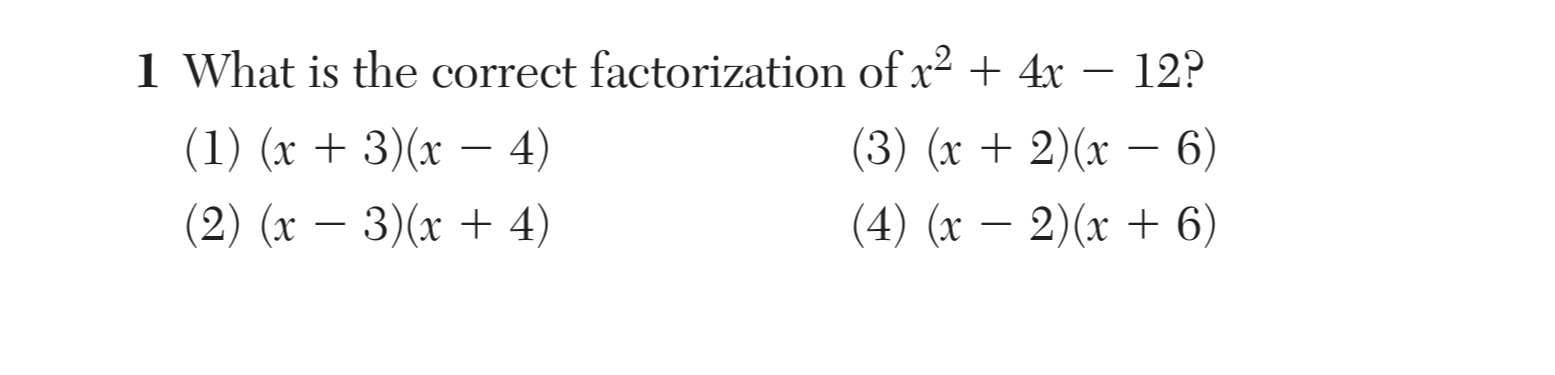

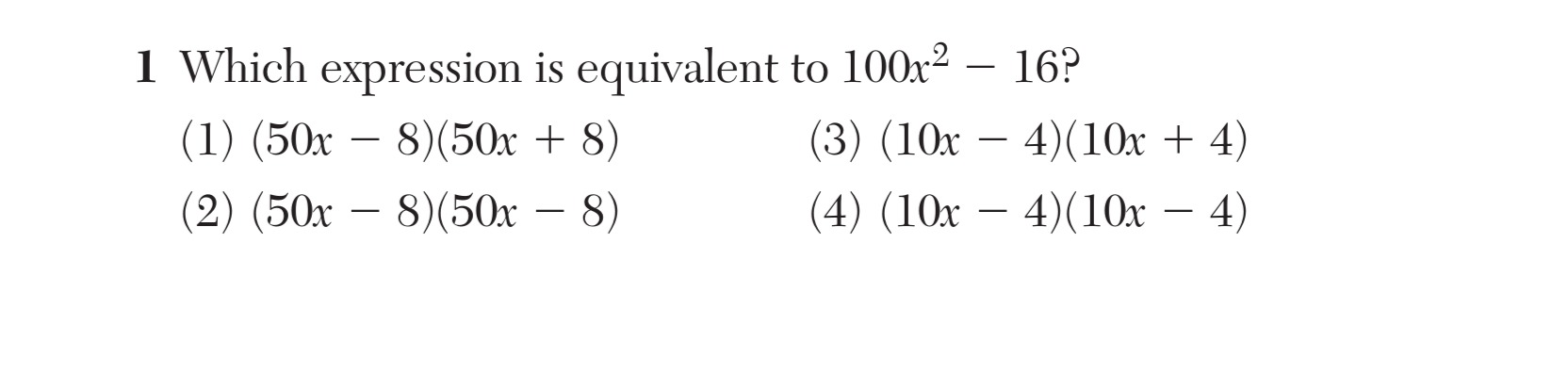
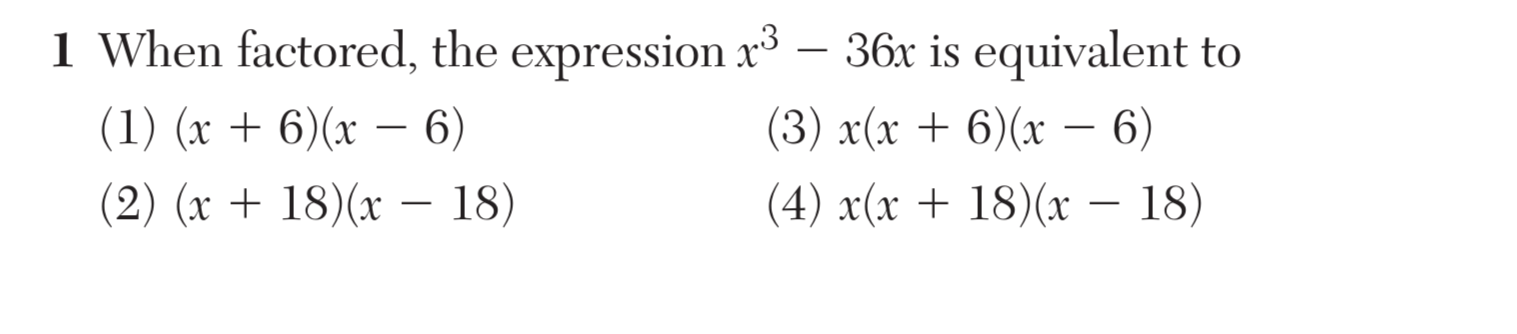
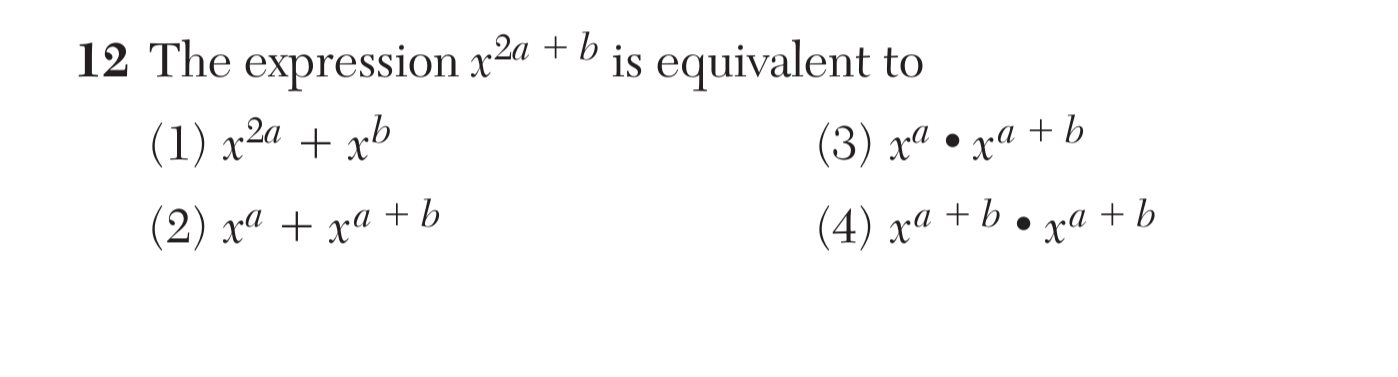


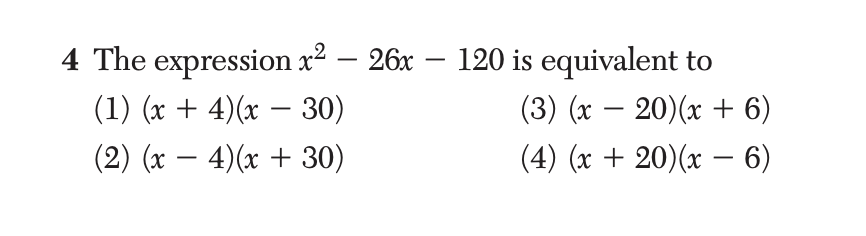
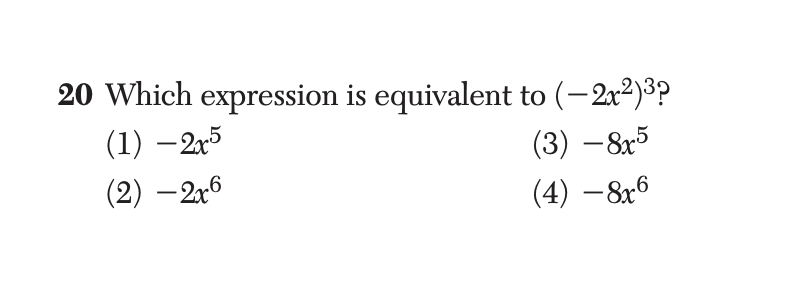
A-SSE.3.b
Choose and produce an equivalent form of an expression to reveal and explain properties of the quantity represented by the expression.
A-SSE.32 questions
Choose and produce an equivalent form of an expression to reveal and explain properties of the quantity represented by the expression.
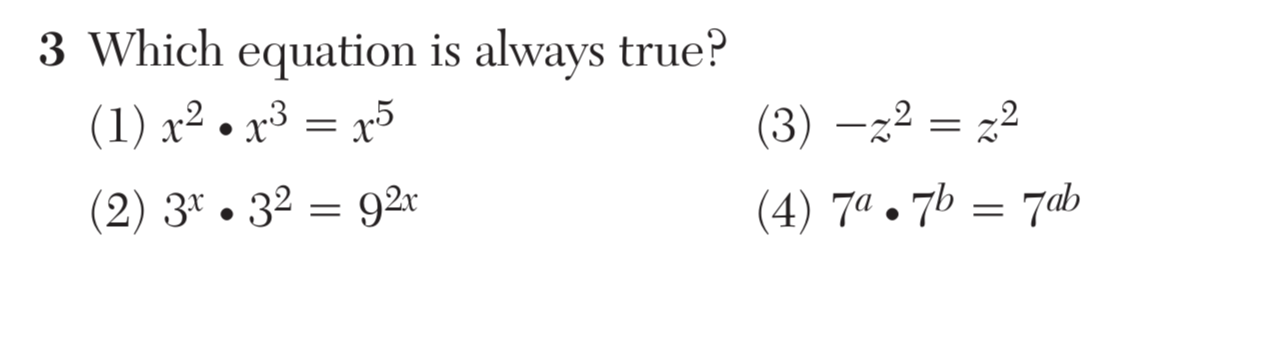

F-IF.C
No additional information available.
A-SSE.3.b
Choose and produce an equivalent form of an expression to reveal and explain properties of the quantity represented by the expression.